Britain’s hidden wildlife spectacle: Wood Pigeons

woodpigeons_master_tcm9-18492‘Familiarity breeds contempt’ goes the old and slightly clichéd saying. Unfortunately, this applies to many wild animals who are neither elusive, an occasional migrant or threatened with extinction, yet don’t seem to have an appearance or demeanour that woos themselves poetically to humans seeking to find a connection with nature.

If you wish to see a prime example of this, pity the poor wood pigeon. Taking away any prior knowledge or prejudices, you would have thought with their dumpy frame, beady eyes that give it a permanent glaze of bemused curiosity, and the smattering of iridescent indigo in the collar suggesting of hidden beauty, it should at least gain a lot more public sympathy.

Instead, by being so numerous it is either ignored completely or derided indignantly. We should be admiring it’s success for actually coping so well with our intensive-farming patterns, an achievement any animal deserves a medal for; but does their ubiquity simply remind us of the failures we have seen in most other farmland bird populations? And when some go the next level and call them ‘rats-with-wings’, are they simply thinking more along the lines of their urban cousins, the rock dove or ‘feral pigeon’, and the perceived waste nuisances they cause on our streets? Continue reading
Falmouth Anchor Column: Nature’s Guardians

My latest nature column as printed in the Falmouth Anchor, Exeter/Falmouth university’s student newspaper.

Whose countryside is it anyway? It’s the ultimate question and has been batted around much of the media recently between two ‘sides’ – the conservation community and the shooting/landowning fraternity – with the attitude we hold towards wildlife and nature as a whole at its core.

Perhaps the most notable incident involved the star of Springwatch, Chris Packham. He provoked the Countryside Alliance to demand the BBC sack him due to him calling on conservation NGOs to increase campaigning pressure against badger culling, fox hunting and illegal hen harrier persecution on grouse moors. This in turn led another columnist, Robin Page, of the Telegraph, to accuse Chris Packham of “knowing nothing” of the countryside.

I wonder how many students at this university have been similarly accused, simply because they love wildlife but don’t necessarily want to shoot  it. As someone born and raised in a landscape of woodland and farmland, who has devoted their studying to conserving wildlife in the field, I find this a highly offensive view. I’m not overly sentimental about nature; I understand the need for culling where necessary, and that wildlife is very much red in tooth and claw.

But, nature needs space too, and that is the point which many fail to recognise: their countryside is an industrial landscape as man-made as the towns they claim to despise. Many also state they are ‘real’ conservationists, yet this generally only seems to be of species that can survive in the conditions that intensive farming creates, and if it can, then make absolutely no impact on their activities.

Cooperation is necessary if we are to improve the future of the UK’s nature. But as long as these attitudes still stand, in many of those who manage a lot of the land where it could best flourish, it will be difficult.

Nature Diary (& Poetry Corner): A Cornish Wood, 21st November

The change from the lukewarm cosiness of Autumn to the first days of ‘Christ it’s cold’ statements upon the fall of Winter are well

alanlee

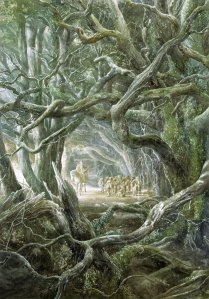
Mirkwood from ‘The Hobbit’, as depicted by Alan Lee.

documented, and this blog has been no exception.

Cornwall gets to linger in slightly milder climes than the rest of the country for longer, but those icy winds can only be bayed for so long. A quick trip to see the spoonbills and massive wigeon flock at Hayle estuary today (successful on both counts – with a goosander appearance for bonus points) was slightly overwhelmed by blasts of Atlantic gale Jack Frost seemed to have left his signature upon.

Driving down to my ‘secret’ wood near Gweek, the hedgerow-guarded country lanes bore dwarfed and gnarled oaks now stripped to skeletal form. Rather than dead leaves, it was a flock of several dozen fieldfares that scattered from their branches in the wind – one of the few songbirds that only comes here in cooler times to the live out the season of not-so-plenty.

Setting up my camera trap at a busy badger latrine, I was suddenly struck by how quickly the woods had changed character to it’s winter self. Bloody hell, it barely felt like a month had past since I was admiring the blooms of bluebells and wild garlic.

And so the wait begins.

Snag and crack! How Winters chill grasps the hazel roots,
And through the oak leaf, ivy and bramble, they tangle round my boots.
But while it may hide sweet scents and shades, to dance upon a distant Spring’s breath,
It is now under the grey sky, coppice brown and bloated stream,
The wood becomes a living death.

One of the most depressing things about conservation? How Middle-class it all is.

This past weekend saw me attending my third New Networks for Nature event in Stamford – essentially, a ‘relaxed’ conference that’s celebrates both the scientific and cultural aspects of nature in one.

I owe a lot to New Networks, especially given my first one back in 2012 was what launched me into youth network A Focus on Nature for the first time, which I am currently proud to sit on the committee for. But this year, I didn’t come away with the same ‘ooh, that was absolutely fab’ feeling as before. Don’t get me wrong, there were many great points, but others not so much I won’t bother rambling about them here though – bar one.

In the space of one coffee break, three people I’d never spoken to before all happened to approach me, and, as if they were fates sent to dictate the idea of my next blog, each said (more or less) “this is all brilliant, but you can’t help noticing how white and middle-class it all is, can you?”

“Well,” I’d reply, “you could pretty much say the same for the entirety of the conservation movement in the UK.” Continue reading

Nature Diary: Gylly Beach, 3rd October

IMG_0656“So you go to university in Falmouth? You must spend all your time on the beach then!” and variations thereof is a frequent response from others when I tell them about my university hometown. Sometimes I reply with an exaggerated ‘yes’, as if non-sunny days and other activities that can also fill your time during the Summer don’t exist, which probably leads to the image of me turning into a dreadlocked surfer tanned as a sweet potato for two thirds of the year (which to be honest a lot of students do tend to become). Or probably not, but either way, it makes it clear we’re not your average university.

In reality there aren’t quite so many beach days for the aforementioned reasons. Yet the ones you do have fix in the memory through sheer good-times value, and looking back on each year, it can seem like whole weeks were subsequently spent on the sand. But moments like sunset barbeques, playing a slightly out-of-tune ukulele and burying your mate up to their neck are just one element of what makes our local beach, Gyllyngvase, such a fantastic student retreat. What really made me fall in love with of it was the fact it contains the best rockpooling known to man.

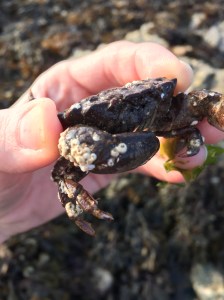
It’s ecstatic enough just turning over rocks, uncovering biological treasure in a game that never fails to excite with age. It was always rockpooling that struck me as the main reason humans would want to get sunburnt, sand stuck in their clothing, beaten up by waves and the various other niggling hazards that come with a trip to the beach, and it was certainly mine. But today’s game was enhanced. One of the first sausages to christen our disposable barbeque that late lunchtime made a post-abattoir bid for freedom, and ended up coated in sand. So, heading off towards the barnacle-crusted swathe of rockpool with this greasy prize in my hand, the typical beach day of a student ended, and that of the naturalist begun. Continue reading

Reintroduction Conundrum: Highs and lows of bringing back British beasts

I burrowed my hands through layers of straw and wood shavings in what was the most exciting game of lucky dip I’d ever played. The recipient of my hoped-for catch bubbled and gurgled, consistently and indifferently as it has for millennia, but right now I could almost imagine that the sound of it’s flow was bursting with expectation, like a child at Christmas, eager to receive that which had been lost from it.

Sure enough, my finger caught hold of what felt like a leathery shoelace, and without hesitation, I withdrew its proprietor with the same triumph (in fact, probably more triumph) of Arthur withdrawing the sword from the stone.

The first two water voles were extracted from their temporary lab-cage digs more or less immediately after each other. The third, like a student unwilling to graduate and face reality, made more of an effort to bury himself away from my liberating hand, but sure enough he too soon found himself sitting on the banks of the River Meon, gazing at his new chalk river home with the updated status of official wild animal.

IMG_0538

Water vole prior to release, using the tried and tested, perfect method of pringle tube transportation.

This was my first water vole release during the three days I spent assisting a reintroduction of these animals last month. Despite its more famous neighbours, the Itchen and Test, supporting nationally important and locally important populations of water voles respectively, the Meon had been sterilised of the rodent some years ago by mink. But following eradication programmes, three years ago it was considered safe to start bringing Ratty back to its banks.

This is crucial on so many ecological levels; water voles are the base of the food web for many predators of riparian ecosystems, which is why so many are released in one go (320 in this particular week), as only about 1 in 10 will survive the year (This does not go down well when they are told beforehand, lined up military style in their nice clean uniforms, that many of them will die. ‘But it’s for the survival of your species!’ Announces the general triumphantly, and they all give high-pitched cheers anyway.) And while there is currently little in the literature to affirm this, it seems likely that water voles are important ecosystem engineers through their burrowing and foraging activity. They’re the rabbits of our waterways, and we need them back. Continue reading

Guest Blog for Mark Avery: A change for wildlife in our farmland

Being a conservationist is a bipolar affair. On the one hand engaging with nature fills us with joy, yet on the other, humanity’s relentless assault on the natural world, and the seeming inability of those who care to get the big business-folk and politicians to listen, can leave you thinking all the efforts of conservationists are ultimately futile…

The Mammal Life of Fishlake Meadows: Hampshire’s next big nature reserve

Originally published in the Spring 2015 newsletter of the Hampshire Mammal Group. I’m currently running my third season of mammal surveys at the site to be compiled in a three-year report.

Immediately north of Romsey lies 200 acres of land beautifully reclaimed by nature. Fishlake Meadows has a complex history – originally just drained farmland, when the pumps were switched off in the 1980s the site was swamped into a myriad of pools, ditches, reedbeds and wet grassland. Its various owners never knew what to do with it – one of them, a certain Kevin Keegan, even threatening to convert it into a golf course – till the current landowner decided to sell it off to Test Valley borough council in July, who are set to develop an ecological management plan and create a new nature reserve for Romsey.

Continue reading

Nature Diary, 26th June: Bashing Bracken

IMG_0346

If a traditional English oak woodland in Spring is nature inviting you to a party, hosted in a well lavished and bright house adorned with flowery buntings of bluebells and stitchworts, with a calming background of melodious birdsong as she casually asks you how you’ve fared over winter, Summer is very much the lingering trailing end when most are too drunk to function. It’s already peaked, and a mess of bracken has sprung up in place of the flowers, greedy to snatch up what little sunlight is left now the leaves are fully immersed out and darkening the canopy. Until the break of Autumn (which I suppose in this metaphor is the DJ playing ‘Closing Time’ by Semisonic as the lights come on and people clear out in search of kebabs), this will remain the status quo in my local woodland back ‘home-home’ in Hampshire.

I’ve not been here since the Easter break, when the party first got going, and since no one else seems to walk in these woods anymore – even the local kids in the street don’t bother playing here, a stark contrast to my upbringing here only ten years ago – the paths have been swamped by bracken. In the open gap between the newer, sweet chestnut coppice and alder/birch woodland dominated half of the wood, and the much more ancient hazel and oak side to the South, there is barely a patch of the ground spared by the plant. I don’t have anything against it per se, but since we wiped out Britain’s only animal capable of consuming it in enough quantity to make an impact (the wild boar), it invades our shrub layer with no survivors.

Picking up a sturdy old hazel branch from the ground, I turn it into an improvised machete and begin hacking away a fresh trail between the two portions of woodland. The smell that emanates from the cut bracken is one that instantly transports your mind back to halcyon Summer days of childhood in this very place. We could be doing the same practice as I was today, beating new paths to explore new depths of the wood, which seemed gargantuan in scale in those days (in reality it’s a rather petite 17 acres); or pulling out the leaves in great bunches, our hands green and sticky from ‘bracken juice’ and that brilliant scent, like cut grass but mingled with the Earthy, forest-floor aromas of the wood itself to remind you of its wildness, would stick around well until we’d gone back home for dinner to remind us where we really belonged.

Within 15 minutes or so, this year’s path through the middle has been sculpted. The bumblebees and speckled woods already flitter in to bask themselves on the newly created sun bed, while I dust myself down for ticks (as hindsight has told me, I wasn’t successful in clearing all of them off). These ‘rides’, even if this one is small in scale, are frequently utilised by the former, while larger animals such as deer and badgers will be likely to utilise this newly created open space to save the effort of pushing through vegetation, in turn playing victim to the aforementioned ticks. Yet I suspect I’ll be the only human they’ll snack on reguarly this Summer, or at all – I doubt whether anyone else will be utilising the new path. Nice in a way; but I think I’d be happier knowing the new generation growing up in this wonderful setting for my childhood were out getting bracken juice all over their hands as well.