100 years since Martha

Mershon's_The_Passenger_Pigeon_(Audubon_plate,_crop)

At 1pm today exactly 100 years ago, Martha, the last passenger pigeon in all of existence, died at the Cincinnati Zoo.

Only a century or so earlier, perhaps up to two thirds of all birds in North America were passenger pigeons. Their population literally numbered in the billions. Following the harvest of the beech mast in the cathedral-like old growth forests of the continent, the pigeons and their squabs were said to have smothered the trees like feathered wallpaper, unbroken for miles, branches often buckling under the sheer weight of the birds upon them.

On the move, their flocks were legendary. Blocking out the sun, this great dark rift in the sky zoomed across the sky – and if watched from the same point, there would’ve been a continuous stream of pigeons above your head for about three days, maybe more.

But they’re all gone now. Dead as a dodo, the better known pigeon species to have gone extinct in historic times. But while the dodo was a flightless bird from a tiny island, passenger pigeons were one of, if not the, most numerous birds in the world on one of the world’s largest continents. Deforestation of the forests so crucial for their beech crop, massacres from hunters greedy for the seemingly bounty-less supply of birds and their slow reproductive rate, unable to catch up with these environmental changes, would’ve played their part.

But regardless of citing the reasons, the sheer fact this bird is now extinct is at once disgusting, tragic and terrifying. No matter how rare or common a species may seem, it’s never completely safe from the human race.

However, we can make the best out of a bad situation. In terms of its legacy, the passenger pigeon holds the most relevant for conservationists today. We can learn from Martha just how fragile all life on Earth really is, and how we should never get complacent. Let’s use this guilt as the best motivation to protect everything else we still have today, from Polynesian island snails to African elephants.

At 1pm today, have a moment’s silence or thought for Martha. If you’re reading this after that time, have one anyway. And then go out into your future, and make sure other species never have to have a Martha at the end of the line.

To learn more about the passenger pigeon and its extinction, my friend Mark Avery’s book A Message from Martha is out now.


My Vision for Nature Part 1: Half Britain

P1040081

If you were to list the greats of natural history and conservation still around today, I’m certain that Professor Edward O. Wilson would be among, if not the, top of the league. World renowned for his studies of ants (“if human beings were not so impressed by size alone, they would find an ant more fascinating than a rhinoceros”), his part in conceptualising island biogeography, and texts such as The Diversity of Life which have shaped the way we look at conservation biology. And of course, there’s his coining of the brilliant word ‘biophilia’, everyone’s innate desire to be connected to the natural world.

But this week, Wilson decided to definitely not play small-scale with his latest proposal. To really avert the greatest mass extinction since the dinosaurs, conservationists should be working towards a ‘Half-Earth’ to safeguard the planet’s biodiversity, and ourselves by default.

Firstly, no, he doesn’t mean NASA should build a humongous laser butter knife and split the globe into two neat pieces. The idea is essentially giving just about half of the Earth’s area back to nature. Wilson argues that it’s pretty much the only sure-fire way of preventing mass extinction. When much of current conservation is like trying to pour water back into a bucket with a hole in it, he has a point.

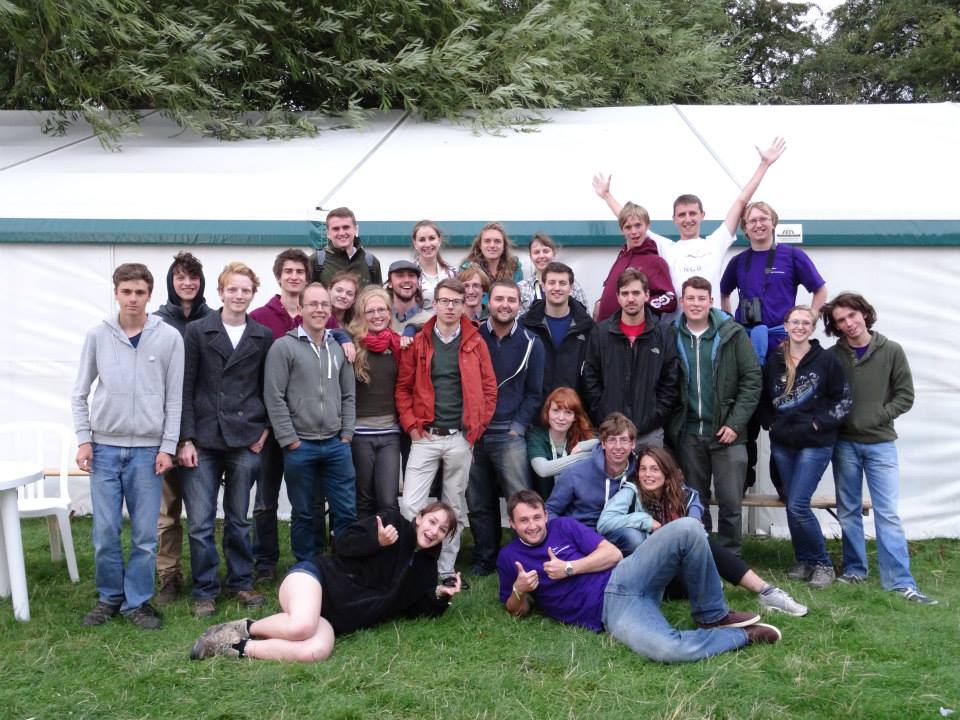
Wilson was also unexpectedly timely in announcing half-Earth this week, for it is only a week before myself and over a hundred other young naturalists from across the UK come together in Cambridge for the launch of the youth conservation movement – Vision for Nature. As we discuss what we plan to change about conservation in the coming years, we’re well aware that many of our ideas will be big, controversial and deemed unrealistic by many. Which is why I’m thankful to Wilson for promoting the half-Earth concept, and hopefully making my own ideas slightly more palatable.

I’ve been mad about nature my whole life, but I can pinpoint the time I became passionate to give as much as I can for wildlife conservation at the age of six, when I first started noticing that so many wonderful animals in the Marwell Zoo guidebook had a fact-box beside them with a logo of an antelope skull and ‘ENDANGERED SPECIES’ written in bold, intimidating letters. Since then I’ve toed-and-froed between which area to specifically focus on, but in the last few years I’ve consolidated towards British wildland restoration (yes, ‘rewilding’ to give it the buzzword), and a long-term idea which, in tribute to Wilson, can effectively be described as ‘Half-Britain’.

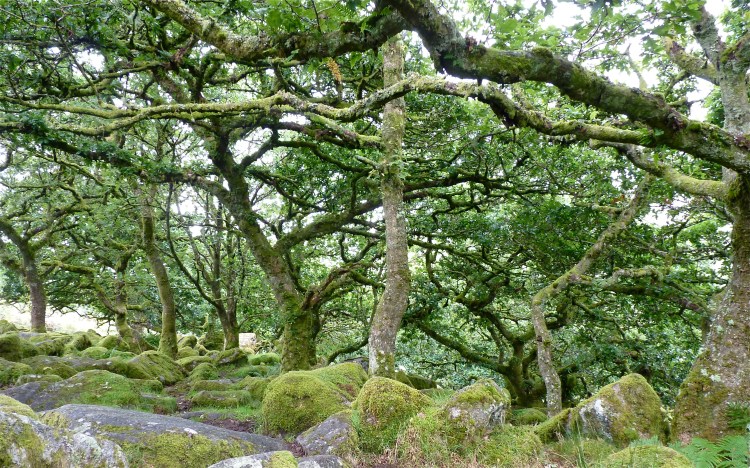
And the place to start is, as George Monbiot, Peter Taylor and the rest of the rewilding lobby will tell you, in the uplands. 40% of the UK’s land area is made up of hills, moors and mountains that should be rich in both habitat and species diversity. The truth is that they’re not. While a few waders, butterflies and wildflowers do well in open, short-sward grassland, this is only one part of the habitat mosaic in what could be a dynamic system of great woodlands and wetlands in the valleys. However, highly unproductive grazing and frankly destructive grouse shooting and deer stalking estates have created a monotonous, low-biodiversity ecosystem across nearly half the country, which even many conservationists have the nerve to claim is good for wildlife – a combination of shifting baselines and fear of upsetting superiors.

Essentially, my vision of half Britain would see most of the country’s uplands greatly afforested and restored in their habitat diversity, but crucially, also linked together.

Looking at the map below, you can see how you could start – corridors down the nomansland between Edinburgh and Glasgow to the Southern Uplands and the hills of Northern England. The next corridor, between the Peak District and the Welsh uplands, would be trickier, but with enough careful management and education it could could be established – even if it means wildlife bridges over/under the M5.
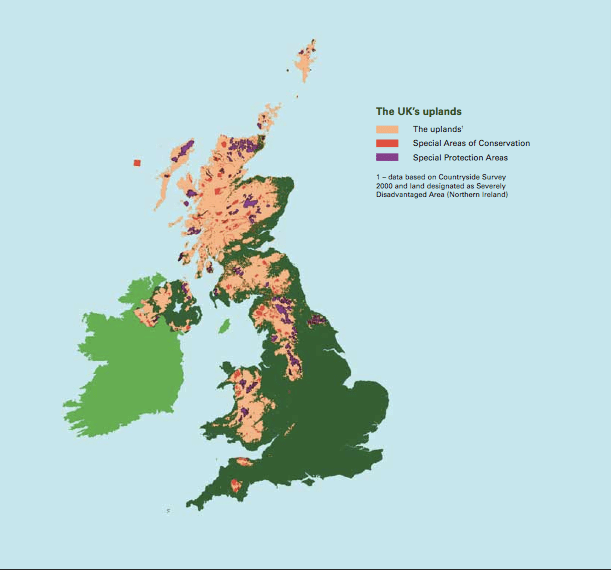
 

Source: RSPB

Source: RSPB

With habitats restored and the core areas linked together, wildlife which cannot naturally recolonize but play vital roles within the ecosystem can be reintroduced. Beavers to restore wetlands and peat bogs, lynx to control numbers of roe and muntjac deer, and wild boar, nature’s gardeners, to enrich the soil through their rooting, and allow diverse flora to grow rather than the bracken monocultures of today.
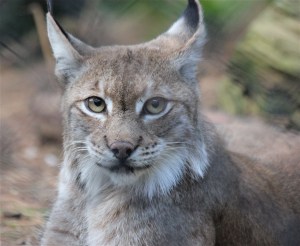
In the long-term, the option is then open for bigger fry as the habitat matures, the corridors are established and people have had time to live alongside such wildlands. Red deer are not likely to be effectively controlled by lynx. Time to call upon the wolf. With enough land cover, perhaps even moose can find a home here again, and the globally endangered European bison can have another safeguarded refuge on our shores.

So a network of rewilded uplands, all linked together, with missing habitats and megafauna restored. Should I ever manage to get the project off the ground in my career, I know I’d never live to see the completed goal. We’re talking decades, potentially centuries here. But before I can get dreaming, I imagine most who read this will think ‘nice idea, very impractical’. I’ll give them some credit for that; it’s only human to be cautious towards proposals that seem too good to be true (though there are many who would also describe these aspirations as far from ‘good’).

But this is going by our current line of conservation thinking, and as the biodiversity crisis has got no better, we’ve got to think crazy. E.O Wilson is respected as one of the soundest, foremost opinions on conservation biology – and he’s proposing this globally, let alone just in Britain!

We already know these areas are largely useless for their current ‘economic’ purpose of hill farming, else we wouldn’t shove in subsides from the taxpayer that keep them afloat. Despite this, losses are so poor that a lamb born following a bad winter can be worth less than £1, mental health issues in farmers like depression are rife, and many of their children are upping sticks to the lowlands rather than carrying on this ineffective practice. In terms of carbon storage, water treatment, forestry, (controlled) hunting and ecotourism, returning the uplands to nature is likely to be far more beneficial to the economy than scraping a few sheep out of a biological desert.

We can continue trying to rinse blood from a stone in the wasteland, or we can regrow the garden. I’m well aware of the path I’ve set for myself is challenging and isn’t exactly a modest life-plan. It’ll piss off a lot of people, however hard I may try not to, but equally I know there are so many out there who feel the same way, and would also want to work towards making this a reality. As any conservationist will tell you, you might as well give up if you don’t work as a team. It’s something where Wilson’s biophilia really needs to come to the fore too. These kind of plans would require mass broadcasting to the public at large – it should be a people’s project.

That’s my vision for nature – who else is in?

The Birdfair Revolution

birdfair

As the train departed Oakham station, the afternoon light through the window beamed intensely, yet was already beginning to haze into a vaguely melancholy shimmer as the day started yawning. Plugging my headphones into my ears, the first song to greet them was ‘Love will tear us apart’ by Joy Division. Very appropriate for the end of Birdfair, I thought.

OK, maybe not. Or at all. I’m fairly sure Ian Curtis had failed romances in mind rather than optics stands and the bird brain of Britain, but when compared to the Birdfair blues, it does indeed feel like you’ve suddenly been ripped away from a fleeting love – the love of course being the mass love for nature amplified thousand-fold, for one weekend a year in a few fields by a nature reserve in Rutland.

Because although Birdfair may (currently) be an event more or less for the converted rather than the masses, to at least feel all this passion in one place brings something very restorative to the soul. With the exception of the odd soddy grump or ego-ridden boasting photographer, the majority of naturalists hold a positive energy of enthusiasm that’s enough to colour any everyday situation when they’re on their own (that’s as long as you can get them talking about wildlife, of course). Now imagine an entire festival of them, and you get some idea of the buzz I’m struggling to accurately describe.

But a strange change is beginning to take hold at Birdfair. It appears, from capture-mark-recapture studies carried out by the University of Metaphors (through a standard methodology of ringing and hair clips), the average age of the attending population across all three days of the event is beginning to decrease. Individuals are being recruited at a younger age than ever before. The beards, anoraks and budgets that might be able to afford a birding trip to Portugal are being diluted by attempts at beards, stylish shirts & braids and budgets that might be able to afford a coffee and bacon bap from the catering tent (just).

Because this year was the year A Focus on Nature, and the Next Generation Birders, took over Birdfair. Alright, maybe the beards and bins did still outnumber the ‘yoof’. It’s still a long way off feeling like Glastonbury despite oft being compared to it. But there were enough of us to turn heads in the beer tent, and even give the security guards something to look at when we were gathered outside it following the barn dance, planning our journey to the Oakham wetherspoons with enough military precision to make a veteran general nod his moustache approvingly.

But before you shoot us down for simply having a knees up (like 99% of people our age), our greatest achievement for being at Birdfair this year was the same thing the event gives to nearly everyone who attends – hope.

Hope that in this time of conservationists cowering under the false pretences of politicians, planting flowers while the garden is being bulldozed, hope when everyone moans about their being no one under 40 into wildlife, hope when species are still going extinct faster than ever before.

The hope stemmed from the small(ish) deeds we did that, in the grand scheme of things, actually mean so much. There was AFON’s kids art mural, once again lead to great success by Beth Aucott and her team of helpers – James Rhodes, Charli Sams, Imogen Mansfield & Thea Powell. Our children’s passport, which I co-ordinated the contacts for but in the end was the masterpiece work of Matt Lissimore and Stephen Le Quesne, gave children the confidence to speak to the stall-holders and discover more about nature and conservation under their own steam. The NGBirders, right at the forefront of the RSPB’s stand, were promoting the future of ornithology right among the tops of Britain’s biggest conservation NGO.

Those are only a few of the names of the many young naturalists I had the pleasure to meet again, or for the first time – friends old and new, whom I greatly look forward to working alongside as we take conservation to the next step in our futures, and get it out of its current mess.

Hope is the lasting legacy of Birdfair, and this year even more so. As any Joy Division fan will tell you, the chord sequence of ‘Love will tear us apart’ is strangely upbeat for its mellow lyrics. So perhaps it really does fit the Birdfair blues. Sad that it was so fleeting. But just as the guitars and synthesisers lift your feelings up to that awesomely catchy tune, you leave with an absolute goldmine of optimism for the future.

Nature Diary: The New Forest, 18th June

The bliss of beginning a summer liberal of commitments (or at least ones I rather wouldn’t do). Having come home to Hampshire from university five days before, the sadness of leaving behind the Cornish landscape, the constant ‘happening’ and great friends is equally balanced out by the old familiars of the homestead, and in particular the local natural history I’ve grown up with, and as equally keen to catch up upon as I am with family and college friends. With the ‘real stuff’ been done down west now, coming home always feels like returning to Tolkien’s Shire – where good company, good food, and above all comfort, take precedence.

Now, if I could just get this bugger of a summer cold out the way.

One of those irritating ones where you’re still perfectly capable of functioning, but are considered to do toss all in terms of productivity, it’s been a waste of a day so far with the sun glowing smugly outside. Between re-enactments of Vesuvius’ eruption with truly Oscar-winning performances from my sinuses, the idle sitting has got too much, and as the day gives way to cooler, more operational climes, I clamber back into ‘Hugo’, my trusty Peugeot 107 (who’d almost certainly hate me if he was human, the way I treat his buzzy form lithe for urban driving like a 4×4 as we batter down country lanes), and head out for a midsummer evening’s performance that should be a highlight of every New Forest naturalist’s calendar

It’s only been a few minutes since driving past the first post that marks the boundary of the national park that I’m pulling up to the venue. Not particularly assuming, and not the most characteristic of settings in the Forest – a tiny copse of firs sheltering little more than bracken and pony-cropped grass upon a small rise. Yet stepping outside, the cool dusk air of a half-woken dream compares favourably to the atmosphere of dog walkers and picnickers in daylight hours. Nature is reclaiming the world. Just stopping to listen will reveal minute yet endless scuffles in the bracken litter, the bedtime chorus of blackbirds punctuated as the sense of sight dims.

It only takes two minutes walk to reach the top of the rise, and though the view stretches far towards Romsey and Southampton in the distance, the immediate vista is somewhat bleak – a vast plain that was once a conifer plantation. What appears now is a bleak waste of bracken interspersed with occasional birch trees, standing idly like stragglers at a wrapped-up party. It’s a textbook example of a managed manscape for forestry, that sits as the New Forest’s ying to the yang of ancient woods where royals once hunted.

But in nature, nothing’s ever completely deserted. And this waste is Shangri la to the enigmatic bird I’ve come to visit.

They’re all over the Forest, but previous visits have marked this place as my top spot. And sure enough, my reasoning is proven within ten minutes. Following a brief prelude appearance from a shrew, yittering like a bicycle wheel in need of oil as it scurries through the heather at my feet, that unearthly reel chorusing across the heath signals the first bird rising for the evening. A monosyllabic churr that sounds neither natural nor man-made – a signal from a UFO would be the closest thing I’d attune – is the first I’ve heard this summer, and all thoughts dictated by the bugs in my throat and sinuses disappear.

It’s not even dark yet, and the bearer of that cry reveals themselves. The nightjar’s flight pattern is always said to be akin to a raptor, but floating seemingly effortlessly in a hypnotising lull makes it entirely unique – even the wings, long and appearing paper-thin, seem far more like a butterfly’s than a bird’s.

Bursts of white underwing appear with each flap like a flashing can-can dancer, and as it disappears to a perch the churring starts anew. These are the males, eager to please the hens and equally concerned for their own bravado, as performances kick off from all corners, echoing like a music hall despite the vast openness of the scene. At one point there may be up to 4 or 5 males calling, while 20 individuals in a square kilometre alone isn’t unusual.

As the light dims, further denizens of the night join the spectacle. Starling-sized noctule bats, with a low, placid flight and clearly audible squeaks as they echolocate the same moth prey as the nightjars. From afar, the growing shadows and similar flight pattern can even confuse the two. A trio of fallow deer bucks drifts across the heather from the far left – two of them, perhaps only a year or two old, have only the single-root like beginnings of the antlers they will grow into. The older individual’s still aren’t spectacular, but have at least developed their first points, and a clear message of who’s the leader in this cervine lad-gang can be seen as his comrades follow him obligingly.

The unmistakable silhouette of a nightjar once again flies directly within my line of vision, and takes perch in a birch. Hunchbacked on the branch, its figure sits within an uncanny valley between a crow, a falcon and an owl – like an otherworldly goblin taking an avian shape. One can see easily how it earned its folkloric name and mythical behaviour of ‘goatsucker’.

As it takes flight, the wings emit a slow, deep clapping sound akin to an (undeserved) mocking applause. The excitement as a hen is located perhaps? It’s only then the sound of another churring male blasts out so suddenly my ears almost begin to ring. It’s probably in the shrubs about 30 feet away, but the ventriloquistic quality of the call makes it sound as though he is at my feet.

The intruder is swiftly dealt with, and I just put my binoculars down in time to feel the air from their wings wiff my hair as the two weave and dart in a high-speed chase, passing within arms reach.

The churring and clapping wings continue as the world darkens relentlessly. In the horizon, the ugly lights of Southampton’s docks and tower blocks spew an unhealthy orange murk into the distant sky: yet silhouetted against that, nature brings it back with the most bizarre and beautiful of our summer migrants skimming over the bracken. Even in our seemingly inescapable man-made world, both rural and urban, nature triumphs once again with the at once gothic and Lewis Carroll-esque life of the nightjar.

Nature Diary: The Lizard, 10th March

Skylarks, the first I’ve heard this year, are serenading cloudless skies once more in their simultaneously mad yet exquisite song. Bumblebees buzz languidly over the fields while the first butterflies of the season – peacocks, red admirals, a couple of small tortoiseshells – flitter their way into your peripheral vision before settling centre stage onto sun-soaked embankments. I can start to feel the sun burning on to my skin, and rather unhealthily, I don’t care. It’s only the 10th day of March, yet it feels like the perfect Spring has already settled here in Cornwall after what seemed like an eternity of almost psychologically damaging heavy rain and ‘mizzle’.

But of all the signs of Spring our poets, composers and romantic novelists waxed lyrical over, I find it rather disappointing none of them gave merit to the re-emergence of the natural jewels I was here to find today – adders.

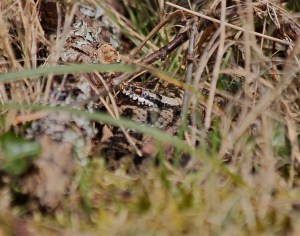
Stumbling upon one of these beautiful snakes curled in the bracken, it’s perfect zig-zag get up perfectly mirroring its home staring up at you with that feral and hypnotising ember eye, is one of the most rewarding sights a British naturalist can discover at this time of year – and thankfully, it was only ten minutes or so before I found one. A plump female, her toffee-gold body sprawled royally across the ground at the foot of a hedge akin to any human sunbather making the most of what little sun we get in this country.

Like any observation of elusive and sensitive wild animals, it’s important to keep a strict coda in regards to where you are and how you behave around adders. Over-excited wildlife photographers have even been cited as one of the primary factors driving disturbance at hibernacula and basking sites, given that the energy cost of constantly moving off when we come barging along when you’re still trying to build it up is dangerously high. So while the temptation to get even closer for that perfect view and photo was itching inside me, keeping a good distance from the bank and rolling each footstep as delicately as possible ensured my presence was barely registered.

Although the thing with rule books is that they are often broken, as my next adder sighting proved. Moving northwards across the reserve, the rough pasture gives way to the maritime heath that the Lizard is famous for. Following the track bisecting this there are frequently placed sheets of tin and felt – reptile refuges, or a herpetologist’s treasure chest. It was while searching for a sturdy stick to lift one with (it’s not unusual for conservationists lifting up these hideaways to be met with a disgruntled adder’s venomous bite the moment they stick their fingers underneath), that my ears picked up that unmistakable sound, like a rope being dragged through dead leaves, of an adder on the move.

Cursing myself for having spooked off an unseen individual nearby, as I looked down I found to my surprise a male adder, slightly slimmer than the ladies and as silver as polished steel, actually slithering lithely towards me. Upon reaching his basking spot a couple of feet from where I was, he curved himself neatly around a mat of brambles and withered grass, leaving me in a state of amazement as I gawped for several minutes at the sight of him, followed by meticulous mental planning as to how I was going to move away without scaring him back off the way he came. Moving backwards as softly as my boots would allow, the adder was still more concerned with warming up his body temperature for the day, and even allowed me to take some half-decent shots.

The whole site is a herpetologist’s dream, and along the same track that I saw this adder, a common lizard scuffled away beneath a small shrub of gorse, and slow worms coiled themselves tightly like thick, amber spaghetti under one of the tin refuges. Turning back onto the heath, it’s not long before you come across a huge, shallow and sandy pond, and peering into the sun-lit water’s edge is like entering an amphibian sweet shop.

With every footfall there appears a palmate newt, minute and almost mistakable for small fish as they dart across the pond bed. In the aquatic jungles of parrot’s feather, the common toads, pumped up and horny, take centre stage. I counted two females who were subject to the amorous of attentions of a further half dozen or so suitors, though unlike the sometimes lethal orgies of I have observed of common frogs in my own garden pond, the toads seem somewhat more dignified: The girls each had one male attached in the amplexus grip, while the others dallied around the periphery like fidgety commuters waiting for a late train. Already you could see their strings of spawn, like jelly-encased necklaces of black pearls, tastefully adorning their breeding grounds.

Especially when compared to what you find on the European continent, Britain has a rather pitiful diversity of reptiles and amphibians; yet what we do have is fascinating, beautiful and charismatic at the species level. To see it all wake up again in Spring is a wildlife ritual to be treasured, especially given the fact they’re one of our most vulnerable taxa – isolation from continual habitat loss is a worsening threat for most of our reptiles (especially the adder), and diseases from rana virus to chyrtid fungus have ravaged amphibian populations globally, and are certainly not unheard of on our shores.

So as I saw a further two adders walking back to the car, time seemed to drift away as I stood back to appreciate them . Next time you think about the signs of Spring, spare a thought for the glorious return of our scaly neighbours alongside lambs, daffodils and swallows.


Flood Problems? Then it’s time for the return of nature’s master engineer.

Firstly, a quick apology for having been a bit silent within the blogsphere over the last few months. New articles stopped coming in pretty much the moment I started my first year at university, and the time between then and now has essentially been trying to make some structure out of the multitude of things going on, both within the course and commitments outside it. With a new year however normal service is beginning to resume, and my resolution is to try and update the blog, both here and on the Independent, as frequently as university life will allow – but even if it does get a bit slow, each new post will at least try to pack a punch!

With that out of the way, it’s on to the issue of the moment. The weather.

That stalwart of British conversation starters has moved beyond the realms of small-talk and into the throes of political and environmental debate over the last month. You’ve all seen the footage of flooded farmland on neo-biblical proportions, miserable people wading knee-deep through town centres and even more miserable journalists standing outside in the deluge with little more than an anorak that would be small on Paddington Bear (can’t they at least give them umbrellas?) Regardless, Britain’s been a lot wetter than it should normally be, and politicians have been searching for all sorts of excuses as to why, while the environmentalists know why and wonder why nothing was done about it.

If you’re talking about the heavy rain itself, well that’s just one of the extremes in weather science tells us to expect from climate change – but that’s another topic for an extremely long article. The major bugbear has been the extortionate levels of flooding, and most scientists and advisors with sense realise it’s due to the inadequate ways rivers and catchments are maintained upstream in rural areas. As it stands, our bare uplands lack the vegetation required to absorb rainwater rather than have it run-off, too many of our floodplains are drained, and many of our water courses are too rigidly canalised.

Issues like these have shifted from the media to debate in the commons thanks to George Monbiot (see ‘Drowning in money‘), yet despite promising talk of reforesting upland areas and encouraging river rewilding (from the mouth of Owen Paterson, the environment secretary failure extroadinaire no less), talk has shifted back down the sense scale faster than a flash flood in Somerset, with David Cameron encouraging dredging with open arms. Mere days after it was dismissed in parliament as both ecologically destructive, and very useful at causing floods downstream.

Continual draining and run-off from agriculture will continue to produce significant floods, yet many alleviation programmes, such as afforestation, don’t take place overnight (As travesties such as the badger cull have shown, patience doesn’t seem apparent in environment ministers). There is however one natural solution that once established, would have a swift effect and do it all for free.

I’m talking about bringing back beavers. And not surprisingly, other conservationists feel this is the perfect time to bring this issue back into the frame.

Perhaps not the most orthodox choice, and I can see why it’s taken so long to suggest this – suggestions about ‘x technological method of flood prevention for £x over x years’ sounds far more serious and directional than suggesting a mass-release of giant rodents. But as anyone who’s seen a beaver dam will attest, beavers create serious new wetlands that create huge catchments of water upstream. In these reservoirs, water is released slowly, and the rapid flow that creates floods in the towns below is negated.

European beaver, photo taken in England, but of a captive individual at the Wildwood Trust. How long before these kind of shots can be taken along the Thames or Itchen?

European beaver, photo taken in England, but of a captive individual at the Wildwood Trust. How long before these kind of shots can be taken along the Thames or Itchen?

I’ve always been strongly in favour with beaver reintroduction, but since my visit to ecologist Derek Gow’s farm in September, I feel it should be one of our priorities within UK nature conservation. Derek has a family of beavers on his farm left to themselves, and they’re largely there to prove to farmers that they aren’t apocalyptic beasts of destruction, but animals that we can easily live alongside, and even benefit from.

Yet as Derek told me, the beaver is a test of our bravery in conservation. We know what it does and the benefits it brings, yet because it has an influence in changing the structure of its environment, landowners will generally stamp down their feet and say no. If we can’t look beyond the occasional flooded pony field and take in the wider benefits beavers create in ecological restoration, flood defence and water purification, we will never achieve any more dramatic rewilding proposals. And quite frankly, if nature conservation here stays the way it currently is, it’s all a bit doomed.

So it seems that now is the time for that test. Let the government and our farmers see how easily even urban populations can live alongside beavers in Europe, and how effective their wetlands are at holding back all that water that would otherwise be spilling out into homes and drowning taxpayer’s money. We can’t afford to say ‘no’ now without any further thought.

Let’s make the first of many ‘crazy’ moves in conservation, and restore the beaver to our shores at a time when we need it most.