Reflections on Bluebells

Take a walk in the woods literally a garden gate away from my own home, and from mid-April onwards, you’ll find that Spring-spectacular that fills both the hardened naturalist and the everyday person-on-the-street with joy by the combined sight & sweet scent of the scene. It is of course the Bluebell Explosion that many deciduous woodlands across the UK experience for a month or so.

At the time of writing, the bluebells are on their way out, gradually giving way as Summer approaches and the more unruly brackens and nettles begin to sprout from the woodland floor. But of course that’s just another chapter in the great ecological cycle of the woods, the death of the flowers providing a nutrient-rich bounty of humus to improve the fertility of the soil and food for it’s detritivorous residents. The seeds for next Spring have already been sown, and by next year that wonderful scent you get on a fine April day will be wafting through the trees once more.

Continue reading

Kenya After-Image: Part 3 (final)

And finally, after an unwanted delay, I’ve got round to completing the last entry of my reflection of Kenya last Summer. Picking up after we left the Mara, we were sadly coming to our final destinations on the trip; however, these were among the ones that left the greatest impression on me since flying out of Nairobi two weeks after we originally flew in.

In the photo above is the Nairobi Giraffe Centre, allowing closer views than one might usually have with these magical animals on a game drive. Much closer at that, with estatic visitors, both tourists and locals, able to hand-feed the giraffes. Or even kiss them, if by kissing you mean popping a pellet between your lips and waiting for a giraffe to lap it up with a slobbering, yet rather raspy, tounge! But the Centre is far more than just a glorified petting zoo, and likewise it’s residents are not your ‘average’ giraffe (if you can have such a thing). It is home to a group of Rothschilds Giraffe (Giraffa camelopardilis rothschildi), one of the rarest of the nine giraffe subspecies. The Centre was originally set up as a captive breeding facility in 1979 in a last ditch effort to save the Rothschild, by then limited to 120 individuals on a single Kenyan ranch. Calves born at the centre have over time being released into five Kenyan reserves, and Rothschilds now number about 500 in Kenya.
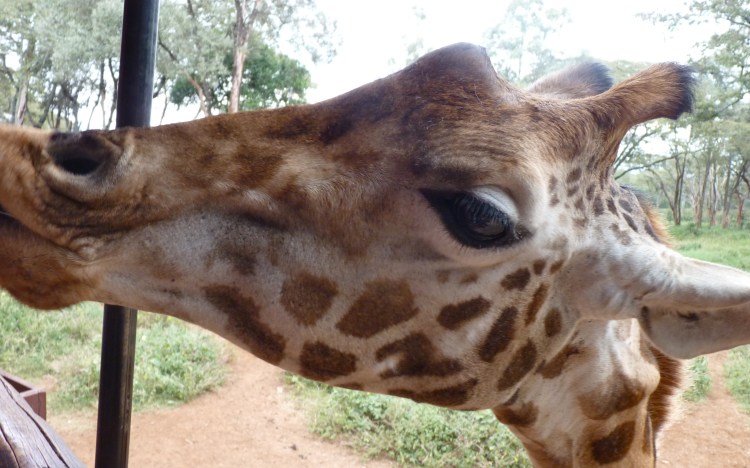
Today, the Centre’s main focus is education, but particularly that of local children rather than the Western tourists, which mostly come just to have a photo taken of them ‘kissing’ a giraffe. They have to pay a reasonable fee, but the Centre is free to the local community and school groups, and rightly so. Many of these kids will come from poverty-stricken backgrounds in the slums, where of course there is no contact with the incredible biodiversity their country is famous for. Being able to see a giraffe up-close, let alone feed one, is an education tool far more inspirational than any diagram in a classroom, and by opening the doors to wildlife and conservation this way is just one small step in generating lifelong respect for nature: And hopefully, the conservationists of Kenya’s future. Because believe me, Kenya is one country that needs it more than many others, and is an issue I’ll be going into shortly.
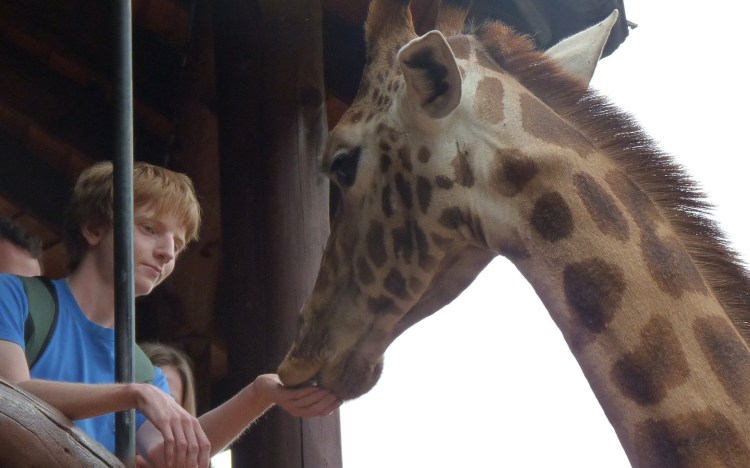
Me with a Hungry Customer!

Continue reading

Croaking into Spring

Though it seems to come earlier each year (and a bit cliche to say it!), the raucous of hormonal begun in earnest last week. It’s that time again when dozens of males make their move on the seemingly less-than-obliging females, often caught between up to two or three boys trying to spread their genes simultaneously and appearing comically bloated due to the overburden of eggs they carry. But it’s a tough job; males can stay latched on to their ‘brides’ for a good few days. Although my attempts to photograph frogs in the past have rarely succeeded given their skittish nature, a combination of a macro lens, stillness and great patience finally allowed me these few shots of this breeding pair

This highlight of the frog’s calender has I’m sure been the same for many naturalists too. As a young kid, the moment these secretive, weird and incredibly awesome creatures emerged from their slumber in dramatic armies that invaded my back garden pond never failed to amaze me, but the best bit was I knew it was just the beginning of months of afternoons in the garden following their lives. First the inpatient frustration waiting for the spawn to hatch; then, when that miracle occurred just under a month later, watching the tadpoles grow from wriggly black specks to the beginnings of that magical metamorphosis; which in turn, resulted in days seeking and picking up delicate froglets hopping over the lawn.

I bet you 99% naturalists with ponds in their gardens did this when young (and probably still do!), leading me to believe that if you want a kid to grow up loving nature in a society that needs it more than ever, digging a pond and encouraging them to discover the life-cycle of frogs for themselves is one of the most reliable ways of doing it.

Stripes v Spikes?

Today’s post concerns the interesting nuggets of thought to chew on that was raised by Micheal McCarthy in his most recent edition of ‘Nature Studies’ in the Independent, entitled ‘More badgers and fewer hedgehogs. Coincidence? I don’t think so’.  Before I go on, I’d just like to mention that Nature Studies is one of the best natural history columns out there, not surprising considering that McCarthy is a fantastic environmental journalist; I’ve only just started reading his book Say Goodbye to the Cuckoo, and already I would heartily recommend it to others just from the first chapters.

And like all good journalists, a topic that needs a longer than average musing should be brought up from time to time. In this case, it’s the suggestion that perhaps increasing badger populations across the UK are partly to blame for the hedgehog’s worryingly dramatic decline over the last 30 or so years. It could potentially be in the Chris ‘I’d happily eat the last panda’ Packham spectrum of controversies, and as McCarthy points out, with the first cull trials imminent (something I heartily disagree with based on the scientific evidence, but that’s another story) our monochrome mustelid friends don’t really need anymore cause for concern on their reputation. Continue reading

Kenya After-Image: Part 2

Of all the reserves in Kenya, the Masai Mara is undoubtedly the best known, and the vast numbers of both wildlife and tourists present during my visit lived up to its reputation. Despite moments relating to the latter where it sometimes felt I had momentarily returned to the Western world (the details of which I’ll go into in my third and final entry of the after-image), staring at a vista of golden savannah that appears to disappear over the edge of the horizon with no trace of civilization, or witnessing the swarms of migrating wildebeest of wildlife documentary fame drift pass lazing lionesses, were enough to make you feel as if you had crossed the veil to an otherworld.

The diversity of the bird species seen throughout our trip, as you can imagine, was fantastic. From flamingo flocks in their hundreds on Nakuru, to delicate Sunbirds feeding from flowers just by our dining table in the Swara Plains camp, the rich variety of avian life we saw was brilliant; but if I had to pick a favourite, it would be these guys:
Secretary Birds, this pair on the Mara strolling placidly through the savannah grass only a few yards away from us. Unique to the raptors (so much so it’s the only genus of its family, Sagitarridae), these incredible birds have given up hunting from above for a literal down-to-earth approach, stalking the grasses on stilt-like legs while keeping a sharp eye out for prey. This can include hares, tortoises and even venomous snakes, which it can dispatch with a well-aimed kick.

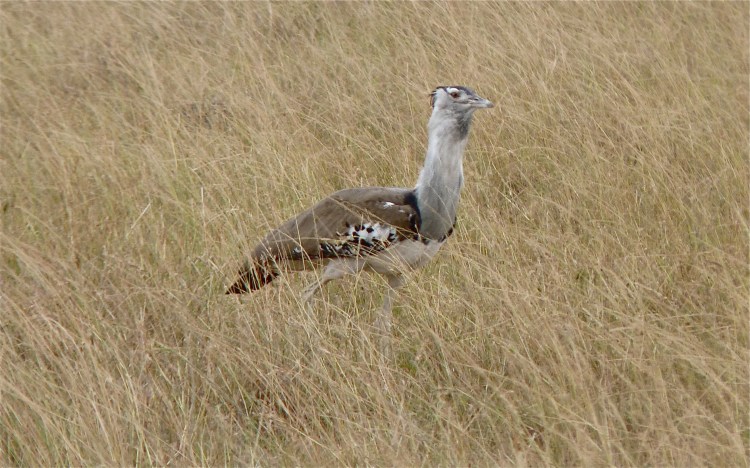
Also up there on my top Kenyan birds would have to be this handsome specimen, a Kori Bustard. While our own native bustards are making a steady recovery from reintroductions on Salisbury Plain, on the African Plains these guys are far more numerous, strutting and foraging through the grass much like the secretary birds. As it is potentially the heaviest bird capable of flight, it probably sticks to the ground for good reason!

Continue reading

Adders and our Problem with ‘Speciesm’

Detracting away from the next Kenya entry for a moment, I just wanted to say a few words on an ugly issue I’ve noticed over the past week. The animal concerned is mainly the Northern Adder, Vipera berus; though it could really apply to any animal that is venomous/has less or more than four limbs/is not a mammal or bird etc., delete as applicable. This whole thing was brought to my attention on Tuesday from Habitat Aid’s blog entry on the public response to a Daily Mail article. Unusually for such a hate-filled paper, the article itself was not the problem, which was about the conservation issues currently surrounding our only venomous snake.

Many of the comments however were something else, and only proved that many of us are still incredibly self-centered in our views towards nature. The comments and their context was explored in greater detail in Habitat Aid’s blog I’ve linked above, but I felt inclined to write this after seeing the reaction from previously reasonably-respected columnist Alexander Chancellor in today’s Guardian. Only a couple of paragraphs you can read here at the bottom of the article; it was still enough to show he was no better than those Daily Mail readers. Commenting on the same issue of the adder’s plight in the UK, Chancellor opens this remark with:

“I’m all for preserving wildlife, but adders? Adders are not nice. They are small and mean and poisonous.”

This is typical of an uninformed view of someone who ‘selects’ which wildlife deserves to live from his own sugar-coated perspective of the natural world. This widely persistent view proves incredibly challenging to conservationists trying to gain public support for saving species that aren’t tigers, whales and the like. Taking his argument apart piece by piece: “they are small”: So what? Let’s just let everything that stands higher than our knees be the only thing allowed to live for own enjoyment then. If it wasn’t for ‘small’ animals, there would be no big ones, simple as that: “and mean” . Nope. Sounds like his research, if any, has been taken from folklore and his own anthropomorphic characteristics he’s put on something that looks ‘mean’. Adders are incredibly timid in reality, and will slither away in a flash of scales if they hear our feet galumphing past their basking spot like an earthquake. Never do they purposely seek us out to spear their fangs into our ankles. And anyway, there’s no such thing as a ‘mean’ animal (except for us, and perhaps chimps, though that is debatable). Every animal works on basic instinct to survive, and will not risk injury or waste energy  to attack something it doesn’t need to. Continue reading

Kenya After-Image: Part 1

The first two weeks of August 2011 were undoubtedly two of the best of my life. A trip to Kenya may be a fairly average holiday for world-hopping tourists, and a part of that was indeed seen through the luxurious yet ‘processed’ lodgings of a typical Westerner on their summer break. Most of the trip however showed me and a group of 15 other students from my college the real deal when it comes to Kenya, seeing the different aspects to preserving wildlife in a country where pressures on the natural world tighten every year and living with a remote rural community miles from the tourist track to experience a completely different way of living without nearly every aspect of a Western life we so obliviously take for granted. Two weeks later, and the UK I returned just felt like it had something missing in a weird feeling I can’t quite describe, but I’m sure those who have had a similar experience will be able to relate to in some way. I had just been to another world, and it’s influence was there with me forever.

This post, as you can see by the title, is divided into three halves. The first two being photo-logs of the amazing wildlife the country is famous for, with the third a more in-depth look at the people, issues and conservation within the country.  Now you’ve had that disclaimer, we can begin…

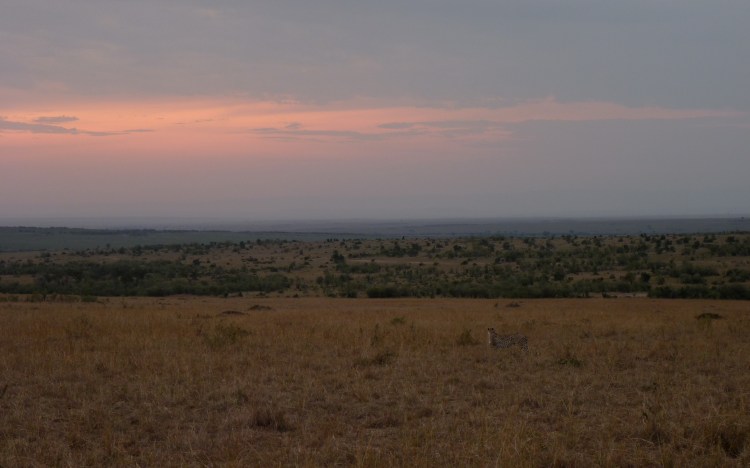
The picture you can see above is of Lake Naivasha at sunset, the bank of which was the location of our first lodge. A short stroll from there to watch hippos emerging as the evening proved fruitless in regard to these mega-herbivores, but the bird life around us more than made up for it. Among grey herons and coots that provided familiar tastes of home, ibises, hammerkop and martins were abundant that evening. Perhaps the most spectacular for me were the Pied Kingfishers. These guys are big compared to ol’ Halcyon of the UK waterways, about the size of a blackbird, and dramatic feeders too, rising to a height of nearly 20 feet it seemed before plunging after it’s fish prey.

Continue reading

550D Testing in London

Last week was a historic one as my first proper SLR camera arrived, a rather sexy Canon EOS 550D. As I haven’t got the kind of large lenses I require for proper wildlife photography yet (but not for long!), my first outing with it was more of a test drive to get my head around the settings of the new camera, similar in some ways but with obvious differences to my trusty ‘bridge’ camera I’ve been using previously, the Panasonic DMC-FZ38.

As you can guess by this post’s title, the outing was my regular half-term excursion to stay with my brother in London. It was the third time I’d been to the city in four weeks (first to see Dr Faustus at the Globe, second to go to the inspirational new WildlifeXpo), so I’m already quite accustomed to the atmosphere. Whilst I’m obviously far happier in a rural environment where wildlife is more obvious, London is surprisingly rich in interest for wildlife geeks like me (just read Mike McCarthy’s excellent ‘Nature Studies: City of Falcons’ for a taste of why this is the case), and my test drive with the canon was at two of my favourite nature spots in the city: The Zoo at Regent’s Park and Richmond Park, which of course was in full swing with the deer’s annual rut. Continue reading

Loving the Bug

For my first proper post, I thought I’d start on something memorable. A post on a group of animals that have wowed millions in their array of diversity, that have inspired naturalists since humanity decided wildlife was good for something other than eating, and if we lost them we too would be doomed to extinction…

Yep, I’m talking about the wonderful world of invertebrates.

Yet for all their worth, the array of arthropods, molluscs, annelids and the like that populate our planet, they slip under the radar much of the time due to the human perception of ‘out of sight, out of mind’. It’s a world we don’t really see or understand, and emotive nature finds few ways to relate to them in the same way we do to big, ‘sexy’ mammalian species such as tigers, orangutans and whales: you would never find a global, celebrity-backed conservation campaign entitled ‘Save the Partula Snail’ or ‘Fregate Island Beetle Time Now’.

Which is understandable, for those flagship species are undoubtedly awesome and their popularity is a key to finding the way to preserve them for years to come. And there are certainly some inverts that are very handy at grabbing the public’s attention due to our own definitions of a ‘beautiful’ animal. Butterflies instantly come to mind, with appreciation of their beauty thankfully turning from pinning specimens to a board for a ‘stamp collection’ to managing habitat such as chalk downland largely for the benefit of rare species of butterfly. They are probably the most photogenic of the arthropods too, as the photo to the right shows: I was lying in a Cornish field for about half an hour snapping shots of these obliging common blues (much to the bemusement of passers by) this Summer. Dragon & damselflies are another group that could be classed as ‘romantic’ insects, the sight of them buzzing along a peaceful brook in a sunny spring afternoon bringing in more deserving public respect. Continue reading