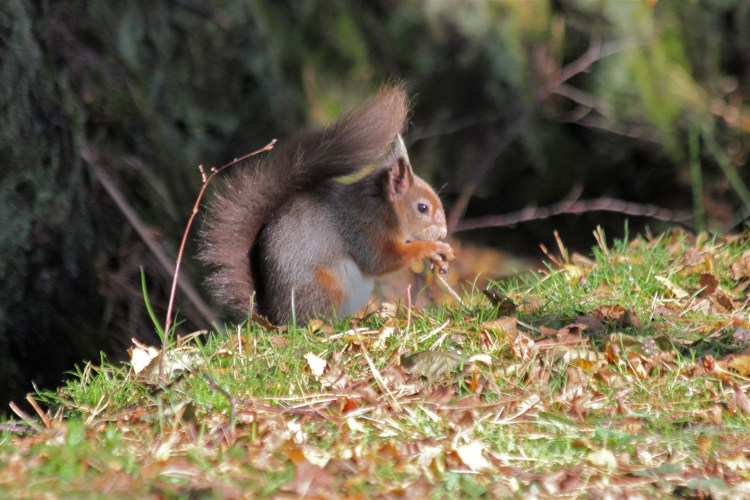
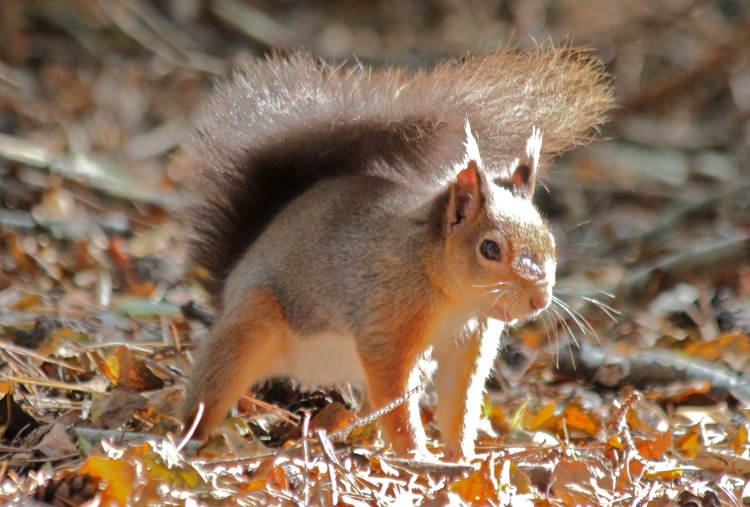
Nature Diary: Beggarspath Wood, 10th April

It is the first time I have walked in these woods – my ‘local patch’ – since February, having arrived home from New Zealand the day before. Having expected a carpet of bluebells and  simmering sunlight reflecting off lime-green leaves, fresh from the bud, to an ecstasy of birdsong, the revelation of it appearing much the same as I left is curious and somewhat disheartening. When I look ahead, there is no mosaic of different greens, yellows and purples, but the same grey-brown wall of bare trees of a wood still in it’s winter slumber. A winter that has continued throughout my absence, no doubt due to the profound effects our fossil fuel-vomiting way of life has had on our climatic processes. Normally, the gulf stream pushes up West across the Atlantic, bringing with it the warmth that sparks the bursting of this season of renewal by mid-March – but melting ice and its desalinating effects are slowing it’s progress. Such things only serve to remind us of how we are still dependent on nature for our wellbeing and what we term as ‘everyday’ in our lives, and just how fragile it is to our ignorance.

This state of being in the woodland’s year is beautiful in it’s own way. Edward Thomas described a February woodland-walk brilliantly in his long-rambling book  The South Country; “The Earth lies blinking, turning over languidly and talking like a half-weakened child that now and then lies still and sleeps though with eyes wide open… It is not spring yet. Spring is being dreamed, and the dream is more wonderful and blessed than ever was spring. What the hour of waking will bring forth is not known.”

Unfortunately, that dream is still on-going when the woods should be wide awake. As I drift under the bare canopy, I can sense nature’s protests around me. The woodland floor among the more ancient strands of oak and hazel is pea-green with the shoots of the bluebells I had been looking forward to seeing upon my return, but instead they remain in a half-grown state, frozen like agonised racers crouched at the start and awaiting the gunshot-signal of just a few more degrees warmth.

The chorus of birdsong is far greater than when I left it two months ago, when the woods remained silent bar the mumbled twitterings of mixed-species feeding parties, as tits, wrens and goldcrests weeved as one cautious wave through the treetops, picking out the few morsels of food whilst relying on each other for predator protection in the exposed environment. But by now they expect the food to be bounteous, and their song is like a plea of discontent at such shortcomings. Whilst this wintered spring may be little more than inconvenience to our eyes, it is life and death to them. The thought of how many chicks will be successfully raised when the cold and subsequent lack of food is lingering into the nesting season is not something I am keen on dwelling upon.

A spot of white bouncing above the woodland floor some distance to my left betrays the presence of a roe doe. She stops and turns her head towards me, fixing me in her gaze to ascertain whether I pose a threat. Then, just a few metres to my right, a woodcock that had been  resting in the leaf litter has already decided not to hang around, and shoots from the ground in a blurred clap of wings. Its exquisite camouflage and long, straight beak for probing mud for worms making it look as if a couple of dead leaves attached to a twig has magically flown off the ground and gone shooting through the trees. The sight of such an enigmatic & shy bird in the day fills me with child-like excitement, but still brings me back to the out-of-sync seasonality; bar a declining few that stay to breed, most woodcock in the UK fly here from Scandanavia to over-winter. It’s not surprising then that this individual would want to remain here a little longer.

2012: A Reflection on a Really Wild Year

The end of another year; the last of the turkey leftovers are being digested, the last-minute panics of where to go for new years grabs everyone’s attention, and the papers are full of review-of-the-years and look-aheads to the next. These have certainly been true in my case (though I think the second one is just about sorted now), and so it is that I embrace the latter and look back fondly on what has been one of the best years of my life so far. A really wild year it has indeed been, with the wildlife experiences I have had being among my most spectacular.

So without further ado, a quick rundown of some of 2012’s natural highlights.

‘Lifers’ Galore – Particularly with birds, since this was the year where I gave them a bit more ‘attention’ (always been more of a mammal & herptile guy). Water Rail at Winnall Moors in February, and Nightjar and Woodcock were both ticked off on the night of June 12th. A plethora of firsts from Fishlake Meadows, my local wetland site which is now much easier to access after passing my driving test this year: the 12th May alone had my first visual sighting of a Cuckoo with four Hobby then catching dragonflies above my head. The cream of the crop there came in September, when I saw my first Osprey and Bittern within a week of each other at the site. Wetland birds just kept on coming during my visits to Cley Marshes and Hickling Broad in Norfolk at the end of August, providing firsts of Common & Green Sandpiper, Marsh Harrier and CraneFinally, my first ever Waxwings in Hedge End rounded it all off in December.

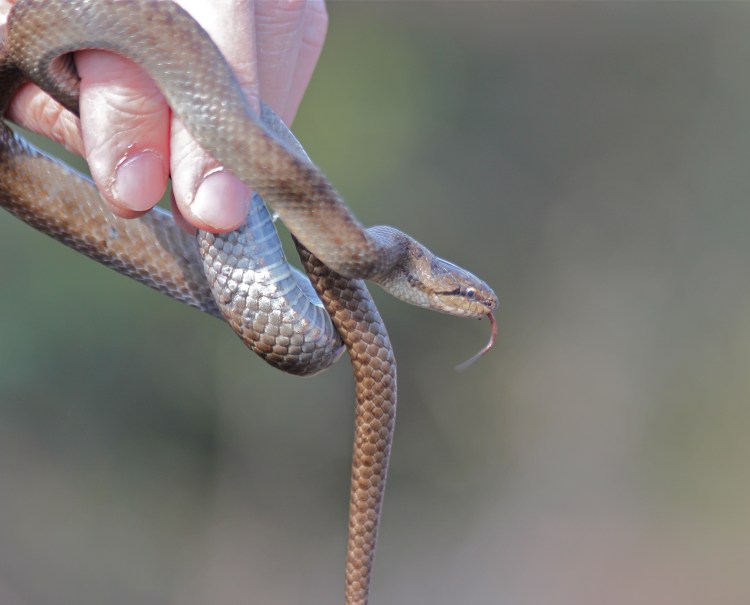
From a non-bird viewpoint, the best was definitely the ridiculous numbers of Smooth Snakes seen during the ARC friends day walk on a Dorset heath in September, alongside all the other UK reptile species bar the adder.
Macro Madness – My 18th birthday not only gave me my first legal pint and clubbing night, but also my first macro lens. I’d always loved being able to get right down to the ground with my old bridge camera, crawling through meadows to capture wildflowers and grasshoppers at their own level, so naturally I wanted to continue this with my new SLR.

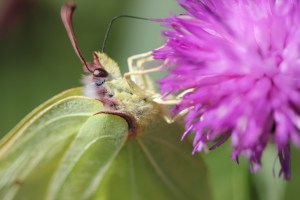
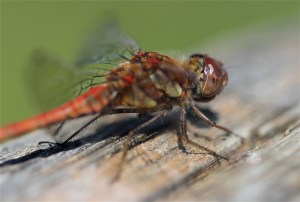
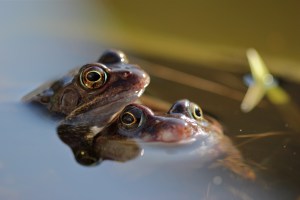
So below are my top three macro shots of the year; the frisky February frogs of my garden ponds giving their best ever profiles, a gorgeous Brimstone feeding on the nectar of the Summer wildflower boom, and a Common Darter ceasing it’s erratic flight to rest on a branch. At least till the next fly dinner comes its way…
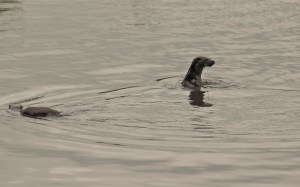
Springwatch Otters – Without a doubt my best British wildlife encounter so far. I’d known of a famous otter family in Dorset that emerged not only during the day in the town centre’s river, but in complete oblivion of people, for some time. If you saw the last series of Springwatch, they were the family followed by Charlie Hamilton-James. And now I had a driving licence. So, one fine June day, I made a carefully-planned slot between my A-Level revision I made the 45 minute journey to the otter’s haunt.

From the moment I had parked behind the Tesco, gathered my camera, tripod and binoculars and headed out to the first stretch of river, there was already one local standing by with bins asking “come to find the otters then?” And so began a hectic 20 minutes or so of rushing up the river, each time told by a photographer or dog walker “they were here about five minutes ago, then swum up that way”. As I progressed away from the town into a more wooded stretch of riverbank, I was beginning to lose hope. Until my heart jumped at the sight of a tail dipping in the water below.

A few steps further, and the trees parted to give a clear view of the river. And within this view, the mother otter and her two mature cubs stayed for what may have been 15 minutes but seemed like hours, in an experience where you feel shifted from your own world, gone through the looking glass and into theirs. The three would dive for fish independently, disappearing in a stream of bubbles only to reemerge gnawing on a fish with huge satisfaction. After doing this every couple of minutes, they would regroup and swim together in a paralell trio, then dive simultaneously and begin again. As they progressed further upstream till they were black bobs in the distance, I just wanted to dive in and follow them.
IMG_3588

Madagascar – With A Levels finally over, there was only one way to celebrate and kick off the gap year: A two-and-a-half week expedition to one of the world’s official biodiversity hotspots with some of the most fantastic, unique and rare wildlife around, Madagascar. My time of the Island was a field course arranged by my college, managed by Operation Wallacea, a fantastic research organisation that utilises student aid among top academics in conservation research. We spent time doing both forest surveys in the Western dry forests of Mahavamo, and reef ecology in those off the island of Nosy Be: Both have had little assessment of their biological value, but both are also being destroyed to the oblivion of the local people who simultaneously depend on them for survival. The forests the victim of intense slash-and-burn agriculture, and the reefs pollution from agricultural run-off.
img_4872OpWall’s research into the biodiversity of the sites and the carbon storage capacities could be the only way these places are saved for both wildlife and people, so this wasn’t just any old sightseeing trip. Our survey walks to look for lemurs, birds and reptiles (not to mention mist netting bats and small mammal traps) were all crucial parts of the equation, and gave us a real chance to live out in the wild. Camping out in the forest is one thing, but even if a rice-and-bean diet and long-drop toilets aren’t immediately appealing, the satisfaction of switching to back-to-basics mode really does restore the soul!

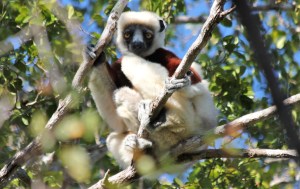
To have seen the leaps and cries of Coquerel’s Sifakas, the Malagasy dawn chorus of a like that sounds alien to our ears, held the remarkable chameleons and leaf-tailed geckos in my own hands, witness the appearance of a shrew tenrec from a longworth trap and even aid the discovery of a new species of snake are memories that will stay with me forever from this magical island. I will return, but I suspect it will not be in the near future. I can only hope that just as much natural wonder is still around then.

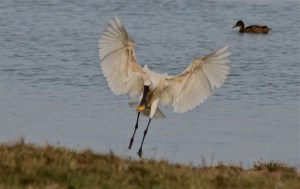
Wild Norfolk – A few days in Norfolk following my brother’s spectacular wedding in August was a chance to see some of the equally spectacular wildlife this county has to offer. Seals by boat at Blakely Point, followed by Marsh Harriers and Spoonbills only ten feet from the hide at Cley Marshes; and don’t get me started on the wonderful wildfowl, Swallowtail Butterflies, Peregrine Falcons and Cranes at Hickling Broad. On par with Scotland I think for the UK’s top wildlife destination.
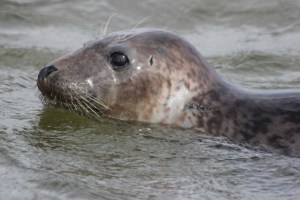
Work Experience at the Cornish Seal Sanctuary – To get to know an animal is one of the greatest privileges around; and by the end of my two week placement I was already wishing I stayed longer as it was amazing just how much I did. There were the grumpy but obliging old grey seal bulls Flipper & Yulelogs, the labrador-like bouncy fur seals Chaff & Andy, and the sneaky short-clawed otters Starsky & Hutch. Stan the sheep too, who convinced me that sheep actually have some of the liveliest personalities in the animal kingdom. And probably the saddest to say goodbye to was the Sija the common seal. Not only was she incredibly intelligent, trained to wave and touch the end of your boot with her nose, but the most mischevious of her more ‘chillaxed’ companions, Luna and Babyface.
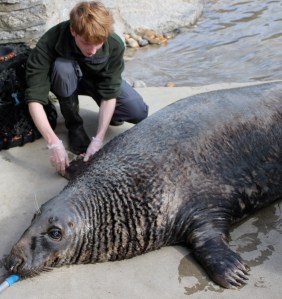
Checking the flippers of Yulelogs

Checking the flippers of Yulelogs

Those were just some of the many characters from my short time at the Sanctuary, and that’s not getting started on the rescued seal pups in the hospital ward. But since I’ll be living only 25 minutes down the road next year when I’m at uni, I’ll be sure to return to say hello.

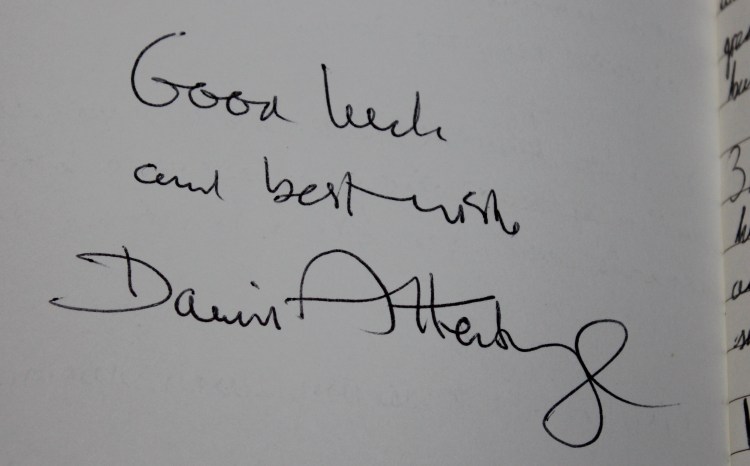
Interviewing Sir David Attenborough – Need I say anymore? My first article for the Independent’s blog site was to speak to the god on his upcoming 3D motion picture, and I can clearly remember my simultaneous awe and shakiness upon going in to meet him in a backroom of a Fulham cinema. “First off, I just want to say your my all-time hero, so I might be a bit shaky to start” was my fumbled disclaimer to him as I hastily tried to get my dictaphone working. “My pleasure” with a smile was his humble reply, and as soon as my questions started and the answers followed, it was like being back in my living room with Sunday tea aged 4 watching ‘Life on Earth’ all over again.

Afterwards, I managed to get a quick chat about Durrell, The Diversity of Life and a signing of my nature diary. “Wow… even at your age, I was never quite this concise!” he mused as he flicked through the pages.

IMG_8669

Nature Matters – As I woke up on the day of this event, run by ‘New Networks for Nature’ in Stamford, I had no idea just how overwhelming it would be. A genius idea of a celebration of nature in all it’s forms; science, literature, art, music, with all the appropriate speakers; that alone was worth the train fare and ticket price. But I didn’t expect to get to meet and know so many fantastic people. After making a point during the ‘Question Time’ panel on young naturalists, my ‘cover was blown’, and soon enough I was thrown into the world of the naturalist community. It’s an event I look forward to attending next year, and I hope you can too – it’s going to get big.

2012. What a year. Here’s to one that’ll be even better!
Independent Blogs: Naturalists of the Future

My latest piece for the Independent, where despite the doom-and-gloom talk of less young people getting outdoors (though I can’t talk; see The Loss of Childhood), I shine a ray of hope by highlighting six excellent examples of young naturalists that give hope for the future of conservation.

Where are the young naturalists these days? The next generation of conservationists

Creature of the Week #12: Radiated Tortoise

IMG_4718

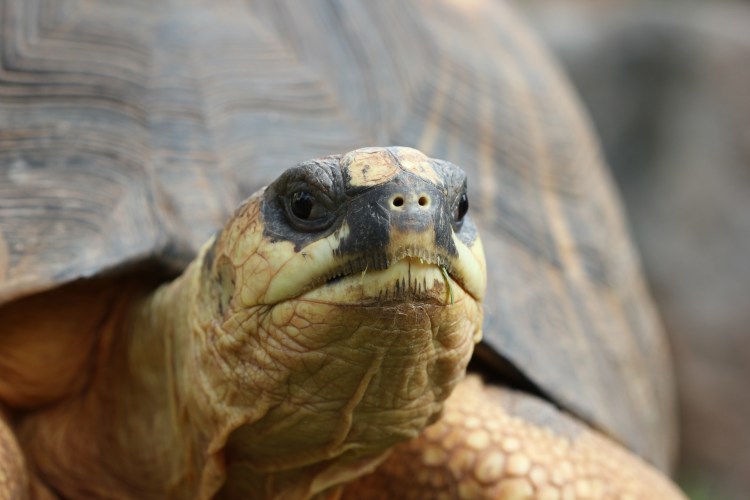
Everyone’s heard of the Giant Tortoises of the Galapagos Islands, and global recognition was given to the sad passing of Lonesome George earlier this year, the last of the Pinta Island subspecies. But there’s another unique group of island tortoises even more endangered than the giants of Galapagos, many of which are starting to recover. The four species of tortoise on Madagascar are all threatened with extinction, completely obliviously to most of the wider world. Among them is this week’s creature, the Radiated Tortoise Astrochelys radiata.

Before man’s arrival on Madagascar several thousand years ago, Madagascar’s tortoises included giant individuals akin to those on Galapagos, filling the niche of large, grazing mammals in the Island’s unique ecosystem. Nowadays, smaller species survive in tiny fragments of what natural habitat is left, and in the Radiated’s case these are the spiny scrub forests at the Southern tip of Madagascar. There, they’re tiny, constricted populations are vulnerable to exploitation by local people. Not only they are a very tasty prospect for the pot, but good money can be earned by exporting them illegally for the pet trade. As one of the poorest countries in the world, this would be an enticing offer for any poor Malagasy person trying to get a bit more by to feed their family.

These photos were taken in the garden of a hostel I stayed at one night in Madagascar’s capital, Antananarivo. It seems very likely they would have come from this illegal trade, so whilst it was fascinating to get so close to them, I feel more guilty looking back on it. However, a monitoring programme is being developed that will provide local people with an alternative income, protecting rather than trading in the tortoises, whilst organisations such as Durrell and the Wildlife Preservation Society maintain insurance populations bred in captivity.

IMG_4774

The Wild Enigmas

It’s only a theory; but when it comes down to the basics of why people often fall in love with the wildlife around them, I feel there’s two basic attributes of the natural world that hold the appeal in different ways. Its familiarity and simultaneously, its mystery.

The familiarity includes the aspects that we all know and love about nature. The things we can observe simply by stepping into the garden, walking down the street or strolling through the woods. These are the Winter garden birds around the feeders and the robin singing in the frost; the swathes of bluebells and croaking of frogs in Spring; the aerial dances of swallows and the harvesting of blackberries in Summer; followed by the spectacular scarlet shades of leaves in our Autumnal woods, sheltering the explosion of fungi below. They’re constant presence in our lives enriches our own lifestyle, creating strong personal attachments that leave us with a warm feeling of privilege to have such beauty as an everyday feature. It’s why the tragic stories of fewer cuckoos, declines in hedgehog numbers and ash die-back receive such prominence in the press compared to the plights of sand lizards, freshwater pearl mussels and the like. It’s as if our lives, not just their’s, are falling apart.

And then there is the mystery. If anything this is the larger driving force behind people’s interest in nature: The familiarity aspect is rooted in the privilege of being able to the know the mystery just a bit better. We are a part of nature, and yet we are so distant from it since we abandoned hunter-gatherer lifestyles. It’s ‘laws’ if you can call them that contradict anything human society has come up with, to the point where words like ‘wild’ and ‘animalistic’ describe anarchistic behaviours within our culture. Like a herd of elephants within an ecosystem of a room, it sits behind our ‘civilised’ lives acting out the same basic life processes it has done for 2 billion years since the first bacteria and algae started kicking about the primordial soup, through the dominions of fish, reptiles, dinosaurs and mammals. Only one species Homo sapiens has been selfish enough to distance itself from all this in the last few millennia, and in doing so have turned our birthplace into an alien world. Continue reading

Creature of the Week #11: Common Darter

The flight season for the dragonflies, damselflies and chasers is long over in the UK as I write this on a gloomy, windy November afternoon. But sure enough they’ll be back in a few months, buzzing around our rivers, ponds and wetlands as they have been for over 300 million years. Among them is the focus of this week’s creature, the Common Darter Sympetrum striolatum.

As well as being stunningly beautiful in it’s scarlet livery, this species is a photographer’s favourite due to it’s ambush techniques of catching prey. This particular individual was sitting spread out on a dead tree at my local water meadows, and so fixed on it’s task that it wasn’t bothered much by me and my macro lens. If any small, flying insect is to appear in range, the darter shoots out like a spring, chases, catches, and eats: And then it returns neatly to the same perch, to wait for another very unlucky fly.

To the insect world, the term ‘dragonfly’ cannot be more appropriate when attributed to these supreme predators.


Creature of the Week #10: Hammerkop

For the handyman of the bird world, look no further than the Hammerkop Scopus umbretta. In fact, handyman is the wrong word. ‘Shipbuilder’ is probably more appropriate, as this wader of African & Malagasy wetlands holds the record for the heaviest nest. These enormous structures can reach almost 2 metres in length and be comprised of over 10,000 sticks, and are capable of supporting a man’s weight quite comfortably. The exhaustive effort of constructing it is rewarded with a far more secure place to roost and rear eggs, with the nest itself being a cavity within accessed through a small hole. This security afforded can also be its weakness however, with other bird species’ such as barn owls being known to evict the previous occupants and take up residence instead.

Bar it’s huge, hammer-like bill that gives the bird its name, the hammerkop at first glance may seem like just another common-brown-job of the wading birds. But this great feat in behavioural evolution just adds to a myriad of examples in nature as to why organisms shouldn’t be judged by appearances.

(Photo taken at Marwell Wildlife)

The Loss of Childhood

I must admit, if I walk into a hide at a nature reserve, the majority, if not the only, people I see are generally bearded and bespectacled men over the age of 50 with expensive telescopes and camera lenses. As a gangly 18 year old with unfaded ginger hair walking inside the hide often feels like the cliche scene of the outsider appearing in the saloon bar of a Spaghetti Western, as the crowd of regulars turn round bemused at this alien.

That said (bar the odd old grumbler), the naturalists, wildlife photographers and birders I’ve met, whilst engaging in our shared hobby of observing the natural world, have been far more welcoming and enthusiastic than movie cowboys, with a common remark I’ve heard been along the lines of “your very keen for your age”, “it’s so good to see young people like you still into this sort of thing” and so on. And these are fair comments. While things like birdwatching and pond dipping, or even just been able to play in the woods, were once typical childhood pursuits that subsequently founded a passion for nature in adulthood, such pastimes are now so rare that the children who do develop a love and knowledge of wildlife are described as unusual, sometimes even ‘weird’ among their peers.

The decline of new naturalist blood has not gone unnoticed by more official bodies; the National Trust published their Natural Childhood Inquiry recently to dissect the circumstances behind this phenomenon, which has already been dubbed ‘Nature Deficit Disorder‘ by others. And on the day I write this, both David Attenborough and Chris Packham have voiced their concerns over the disconnection of today’s youth from nature. Continue reading

Photo Round-Up: October 2012

October, the first month in which it starts feeling properly autumnal, kicked off from the first with my two-week work experience at the Cornish Seal Sanctuary in Gweek, near Falmouth.

Checking the flippers of Yulelogs, one of the bull Grey Seals

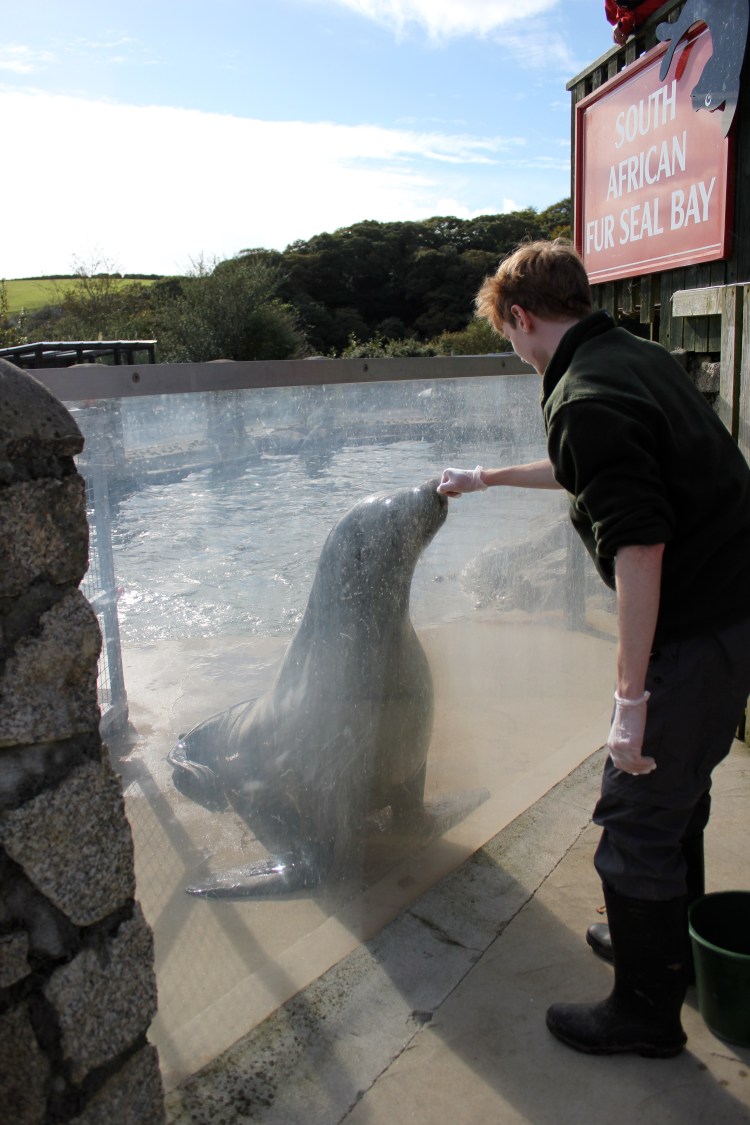
Target Training Chaff, a South African Fur Seal

Feeding the Resident Grey Seals

In the end, two weeks wasn’t enough. It was a fantastic experience getting to know the huge characters of the Sanctuary’s residents; from the grumpy yet compliant grey seal Yulelogs, the ‘class show-off’ sea lion Andre, to the highly emotional group of Humboldt penguins! The sanctuary is most famous for it’s work in rescuing, rehabilitating and releasing seal pups, and being the season in which they start to come in I was able to take part in some of this week, feeding and taking the temperatures of the very cute (yet very noisy!) newly rescued pups.

And for my days-off? More seals! I visited the wild colony not far from St Ive’s twice whilst I was down there, which could be viewed from the clifftop above (hence the distance in the photo). Being the grey seal breeding season the beach had plenty going on, including white-coated pups wailing to their mothers, and the beachmaster bull scaring off the most daring males simply by glancing at them!

Common Lizard – Seen while walking cliffs by Zennor, Cornwall.

Whilst I was down there I also took the chance to visit Paignton Zoo, a brilliant place run by the conservation charity, Whitley Wildlife Conservation Trust.

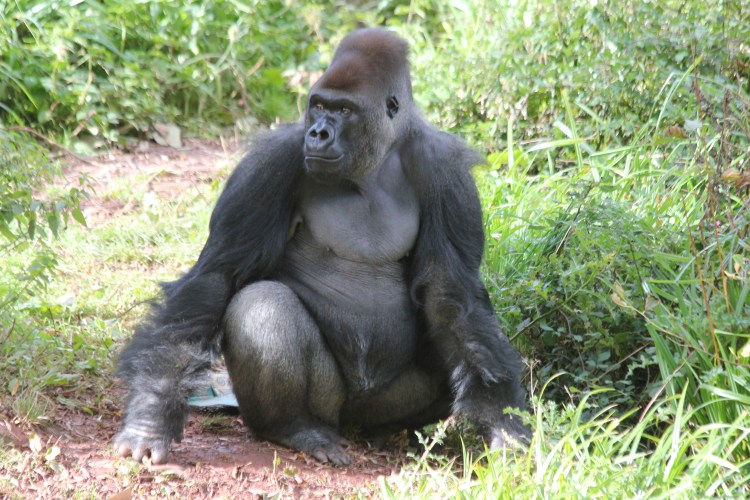
Silverback Gorilla ‘Pertinax’

Red-necked Ostrich

Black Rhino

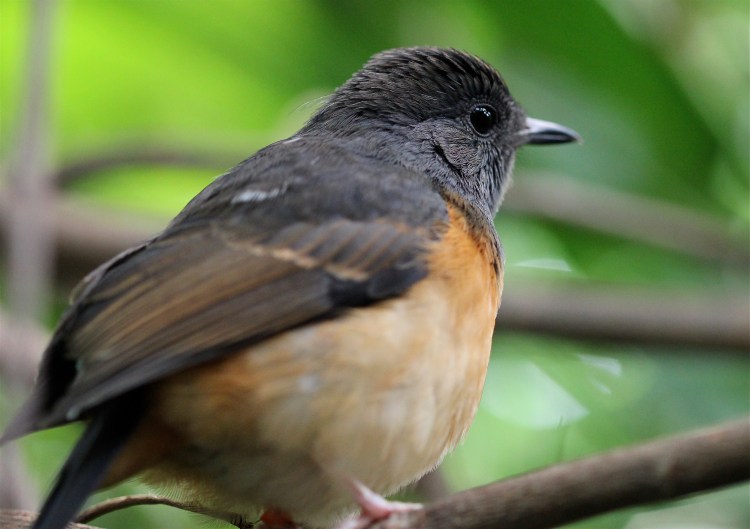
White-rumped Shama

Speckled Pigeon

A quick trip to London to visit my brother also gave the perfect excuse for another zoo trip, which was of course the Zoological Society of London’s historic collection in Regent’s Park.

Philippine Crocodile

Komodo Dragon

Every Autumn for us always hails an outing to Brownsea Island. Slap-bang in the centre of Poole Harbour, it is home to an incredibly biodiverse mosaic of habitats managed by the National Trust & Dorset Wildlife Trust. A huge estuarine lagoon fills with over-wintering waders at this time of year, with particularly large flocks of Avocets and Bar-tailed Godwits. Reedbeds and heathland are surrounded by mixed coniferous and deciduous woodland, which provide an isolated refuge for red squirrels, safe from the conquest of the grey.

Avocets flocking into the Lagoon

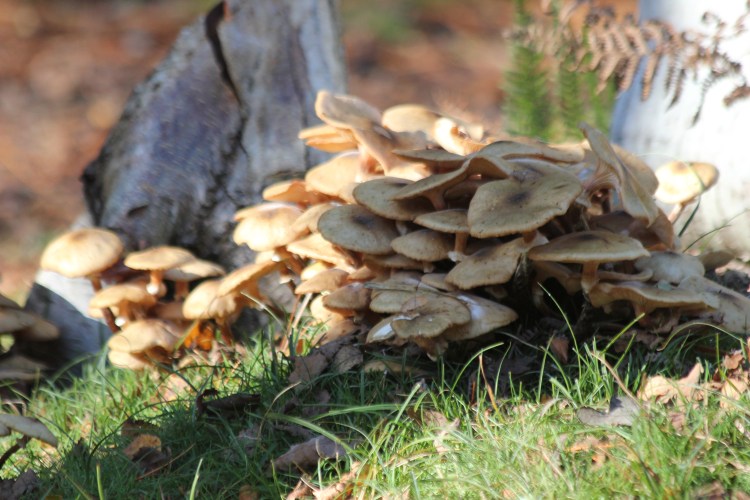
Autumnal Fungi blooming on Brownsea

Red Squirrel

Red Squirrel

Sika Deer Stag