Creature of the Week #9: Philippine Crocodile

Undoubtedly, crocodiles are one of the planet’s most tenacious predators: The first set of hungry eyes, peeping from the river’s surface at the same time as the dinosaurs dominion, and then surviving virtually unchanged in for the millions of years that have since passed. So successful are they at the role they play in their environment, that evolution has only made marginal changes to their morphology and behaviour in this time, whilst they’re prey on the land carries on changing completely hundreds of times.

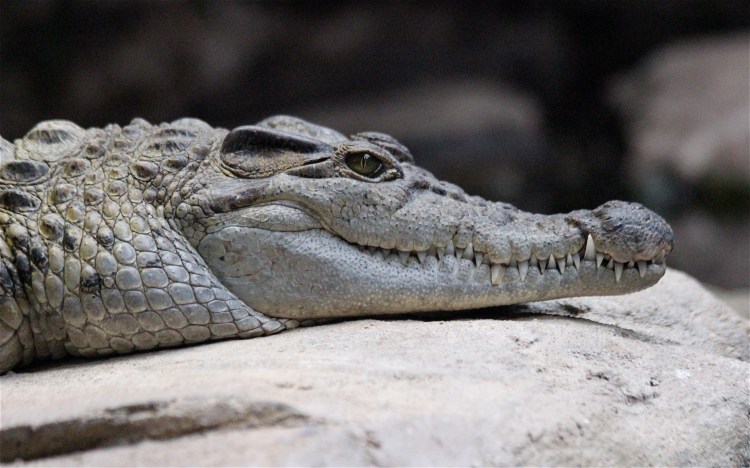
And yet, this mastery of evolution that has survived the most dramatic of ecological catastrophe, is meeting it’s match with one species alone. Guess which one? Subsequently, the Philippine Crocodile Crocodylus mindorensis is one of 7 out of 14 crocodile species listed as threatened by the IUCN. More specifically, it is listed as ‘Critically Endangered’, numbering only 250 in the wild and on the very verge of extinction.

But while it is easy to get conservation support for tigers and mountain gorillas, few people are willing to help an animal which essentially represents humanity’s fear of nature’s ‘dark’ side. And, along with habitat loss from drainage for agriculture, this is one of the key reasons why it’s in its current state. Though it is a small species and more wary of humans than some of its larger relatives, locals still kill it indiscriminately out of paranoia.

When the country’s government doesn’t even support conservation measures for the animal, it seems as if the captive population may be the last remaining vestige of this remarkable reptile in the near future. But with biodiversity slowly growing on the agendas of many of the world’s leaders, as the effects of it’s loss on our own livelihood become more apparent, let us hope that millions of years of perfected evolution isn’t wasted for the Philippine Crocodile in the time to come. Or indeed, all of its remarkable kindred.

(Photo taken at London Zoo)

Creature of the Week #8: Castor Bean Tick

It’s unlikely you’ll find photography portfolios, wildlife documentaries or any form of public support for the Castor Bean Tick Ixodes ricinus. Not surprisingly, this is due to its lifestyle of waiting on exposed vegetation,such as this bluebell, for passing mammals to fix its mandibles into, be they dog, deer, human; anything fleshy and warm-blooded is on the menu. The tick can stay attached to its host for a few days after this, gorging on their blood till it is so bloated that it looks like a different animal entirely, like a swollen pebble on legs, resulting in it finally dropping off and leaving behind a painful sore. Sometimes this includes lyme disease, making it more of a concern than just an irritating hitchhiker to the woodland rambler.

These credentials make this arachnid a much resented part of our fauna, especially among those like myself who live near or spend much of their time in woodland. The body check for ticks at the peak of their season isn’t always successful (and I have had ticks in particularly bad places, which I don’t feel I need to explain!), and when you have a dog there are times when he seems more like a living bus doubling as a blood-bank for the parasites. But whilst they may be a nuisance, at the end of the day they are just another part of the woodland ecosystem, and like every other organism we share our planet with should still be seen through an unbiased filter of respect for, quite simply, what it is. Even if it is pretty hard in this case.

In fact, I’d say the great thing about ticks within a human context is they remind us nature isn’t all squeaky-clean and disney-fied. They’re one of the few things that literally gets us back in place with nature the moment they hitch onto our legs, and as a result allow us to directly contribute to the ecosystem.

I’d still recommend covering up your limbs when going in the woods or long grass, and if you do get one, get it off quickly. If it’s already bitten, tug it off with tweezers by the head, not body, so no parts of the animal are left in the wound, and if it’s been there for a long time, make sure the wound doesn’t get any bigger. If so, lyme disease is a possibility.

Or conversely, enjoy the feeling of being part of nature’s food chain!

Creature of the Week #7: Coquerel’s Sifaka

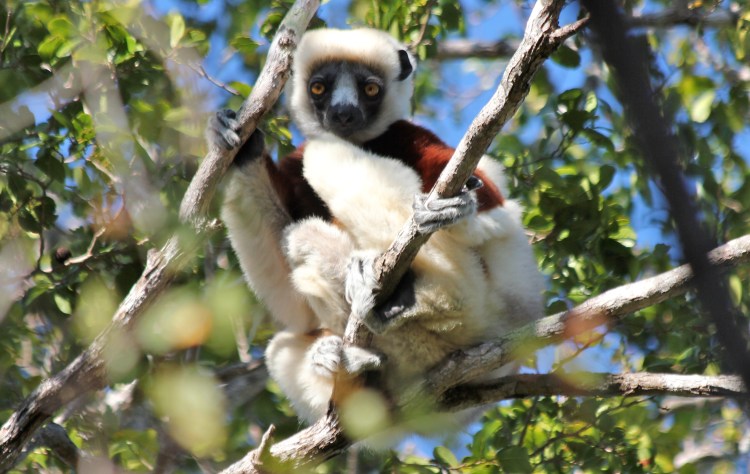
After the Indri, the Sifakas are the largest members of the lemur family, and the Coquerel’s Sifaka Propithecus coquereli is one of 9 species that inhabits the lemur homeland of Madagascar. With physical barriers such as rivers proving an un-passable barrier for most lemurs, the speciation of these different sifakas has been allowed to occur, each adapted to their own specific region and habitat. In the Coquerel’s case, this is the dry forests on the Mid-Western edge of the Island.

While many lemurs are unsurprisingly shy of humans due to the Malagasy’s fondness of the primates as dinner, the indri and sifakas are taboo to hunt, as they are believed to be the reincarnated spirits of their dead ancestors. Subsequently, they are far less wary of people, and the sifaka in this photo was just many I saw whilst on an expedition to the Mahavamo Forest with Operation Wallacea this Summer that would take no heed of us, both on forest surveys and whilst in camp, allowing great photo opportunities as they sat above our heads crunching fruit.

Unfortunately, like most lemurs (and in fact most of Madagascar’s fauna) all sifakas are threatened to an extent, and the Coquerel’s Sifaka is currently listed as ‘Endangered’ on IUCN’s Red List of Threatened Species. The terrifyingly rapid decimation of Madagascar’s forests for development and agriculture of course play a large part, but ironically the stronger presence of conservation science on the island has convinced many communities that there is nothing spiritual about sifakas; not only are they as tasty as any other lemur, but easier to catch. As conservation might as well not be bothered with if you can’t get the support from the locals, changing their perceptions of the sifaka whilst not intruding too heavily on their own needs and cultural values will, and is, proving an interesting challenge.

Creature of the Week #6: European Lynx

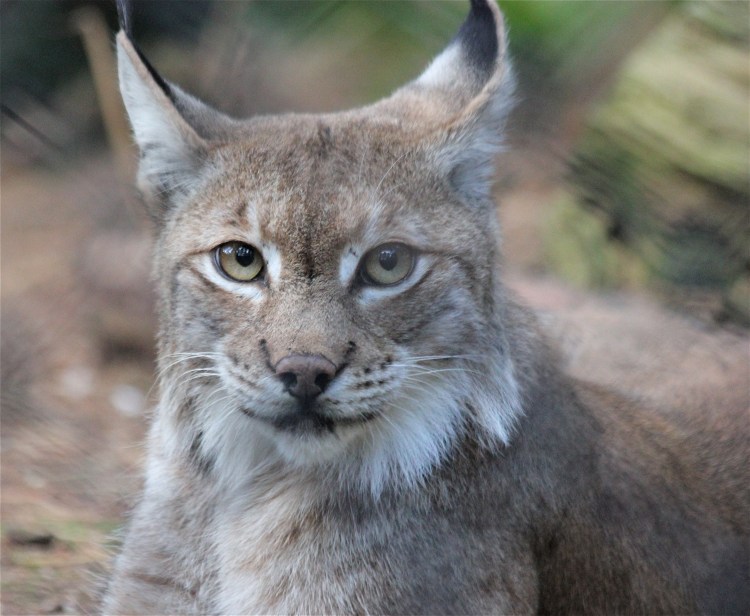
The beautiful European Lynx (Lynx lynx) is not only one of Europe’s largest predators, but one of its most elusive. Even people who live right out in the middle of remote lynx country, such as Poland’s Bialowieza Forest or the Carpathian Mountains, can go years between seeing one. This was still the case when it was widespread across the continent, including the British Isles; whilst bears and wolves were ubiquitous enough to demand bounties for their capture and places within folklore and fairy tales, the lynx slipped by unseen. (Among the few folk tales surrounding lynx that exist, the most bizarre is that if it urinates into a hole it will solidify into a ruby!)

This secretive nature is a key to the lynx’s success as a predator, working by stealth and ambush rather than sprinting down its prey when it can be avoided. Adaptations to this technique are apparent across its physiology; Muscular legs to generate the energy for that killer pounce, large, soft paws that muffle the sound of it’s movements, and when you don’t need a long tail for balance in sprinting a short, stubby one is present so as not to betray its presence. Even the ear tufts, which were often thought to have little use, have been found by researchers to be a potential advantage in detecting low frequency sounds for it’s radar-like ears.

As a predator of anything from rabbits and ground birds to roe deer, lynx play a crucial role in their ecosystems as top predators; yet sadly, their demise from much of their former range, largely as a result of suitable forest habitat, has lead their former habitats to be a lot less biodiverse as a result. This is due to the de-establisment of a trophic cascade; these are the ways in which top predators; such as the lynx and wolf, maintain the health of their ecosystems by controlling not only the populations, but the feeding patterns, of their prey. With predator pressure a deer will only eat a few leaves of a plant and quickly move on, rather than spending time devouring it entirely or overgrazing a small area. This increases plant diversity, increases invertebrate numbers, thus increasing woodland birds, and so on.

And Britain’s woodlands are in severe need of these, with too many deer that have lost fear of predation, as well as the rapid spread of introduced muntjac deer. With issues over livestock security making it less likely for the wolf to make a comeback in the UK, the elusive lynx is a far better candidate. Able to live alongside without us even knowing, less inclined to kill livestock, with roe and muntjac deer in particular as perfect-size prey and added economic incentive from ecotourism, I personally feel the lynx is an ideal candidate for reintroduction. It isn’t just a moral need to bring this incredible animal back to our shores, but an urgent one for the sake of our wildlife.

(Photos taken at Whipsnade Zoo & the New Forest Wildlife Park)


Creature of the Week #5: Sand Lizard

Even if you live in the UK, it’s unlikely you’ve ever seen a sand lizard; and not just because, like most of our reptiles, they are incredibly skilled at staying hidden when they sense our trampling feet nearby. Lacerta agilis is the victim of huge population decline across the whole country, due to the loss of its sandy lowland heath habitat. A complicated place for these guys to live in, firstly because it’s largely plagioclimatic, i.e. it is a habitat maintained by man. The acidic soils mean few plants can grow on it, but among them are bracken and birch, and as they grow and add dead-organic-matter to the soil it becomes easier for the area to revert to woodland: However, grazing by livestock in days gone by prevented this and created the heathland. But as agriculture became more specialised, this became less common. And whatever heath was left would often fall to the second problem: To the non-naturalist, lowland heath appears bare and derelict. Perfect for a new housing estate or golf course.

These factors (along with regular heathland fires, often by kids doing it for fun) meant that by the 70s, sand lizards were confined to a few isolated heaths in Surrey, Hampshire and Dorset. Thanks to the work of Amphibian & Reptile Conservation however, thousands of sand lizards have been bred in captivity and then released to former and new sites across the country, with over 200 regularly been released each year. The sites were sand lizards are present or reintroduced are then carefully managed, ensuring every requirement is met: From open patches for basking to sandy areas in which to lay their eggs.

Whilst the sand lizard is doing better, it is still a rare species given full protection by the Wildlife & Countryside Act, and I was only allowed to take the above photograph as I was in the company of a licensed member of ARC. The individual here is been re-released onto heathland in Dorset managed by ARC, and was one of many reptiles I saw that day (including the equally rare Smooth Snake) as part of their Friends Day last week. For all the fantastic work they do with sand lizards and the rest of Britain’s herptofauna, they deserve far more attention, and if you are not already I hope you’ll join up as a member. The Sand Lizards will definitely appreciate it!


Creature of the Week #4: Great Hornbill

‘Great’ in both senses of the word, the Great Hornbill Buceros bicornis is the largest and arguably most dazzling of the hornbill family. With Great Hornbills, they’re physiology is as much about spectacle as practicality, with it’s dazzling yellow neck and beak and hollow casque largely the result of sexual selection. These come to the fore in the bird’s breeding season, when the booming and repetitive roars and barks of promiscuous hornbills resound through the tropical forests of South-east Asia and Western India.

Perhaps the most fascinating part of these animal’s breeding ecology however is their nesting behaviour. As the female begins to incubate eggs, she imprisons herself within a nest cavity in a hollow tree by sealing up the entrance with mud, till only a teeny gap remains for her mate to feed her and for her to deposit her faeces. In many ways, a sound strategy; practically a zero risk of predators taking the eggs, and the maximum amount of energy that can be put into incubating eggs is utilised. It’s just ensuring nothing happens to Daddy, who becomes her and their chicks literal lifeline for over 50 days!

The individual in this photo (a female, as indicated by the pale-coloured iris) is a captive bird at the Cotswold Wildlife Park in Oxfordshire. The Great Hornbill’s complicated nesting behaviour makes them difficult to breed in captivity, yet the Park was among the first to succeed in doing so, and continues to be part of the bird’s International Captive Breeding Programme.

Creature of the Week #3: Garden Warbler

“Classic LBJ with little or no defining features” would be a typical reply from a twitcher if you were to ask about the Garden Warbler Sylvia borin. Yet when one considers the tremendous journey these birds undertake every year from Africa, alongside the rest of its warbler kin, hirundines, nightjars, hobbys & cuckoos just to name a few of what makes up pretty much half our total birds for part of the year – and all seemingly innately – what it lacks in what we decide to call ‘physical features’ is more than made up for by this incredible feat. And they don’t stay too long either, just two or three months after arrival in April or May before they decide to head back in mid-summer.

Seeing songbirds singing at the top of a bush through a pair of bins is one thing, but seeing them so close in the hand of the ringers puts a whole new dimension on your admiration for them, as detail to they’re beauty they would never normally allow you to see in their element become clear; far more delicate than you would’ve previously thought, and thus only increasing admiration for the journeys many undertake. This Garden Warbler was among a tally of 13 species caught in mist nets on a chilly May morning at a bird ringing demo I attended at Winnall Moors. An increasingly important technique, not merely for scientific curiosity anymore but serious conservation-based research as the number of migrants reaching our shores continues to fall.

So while they may not be our most ubiquitous birds, it may well be a case of you-don’t-know-what-you-had-till-its-gone for the Garden Warbler.

Creature of the Week #2: Giant Otter

Truly one of the most bizarre, alien and incredible mammals in the World, the Giant Otter Pteronura brasiliensis is an animal that seems to be in a transitional stage of evolution between the rest of its otter relatives in the family Lutrinae and the far more aquatically-adapted pinnipeds (street name ‘seals’). It’s more spherically-shaped skull, oversized, goose-like webbed feet and huge oar-shaped tail and perhaps more obviously, its huge size of up to 6 feet long set it apart from other otter genera which, like the native european otter, have a much more weasel-like physiology. Another of the giant otter’s key characteristics is its vast vocal range of frankly weird sounds. From constant low purrs that sound like an electric Chewbacca to shrill ‘squelps’ like a radio going badly out of signal, these, combined with its appearance, would lead you to think it dropped off Mars.

Of course, it (allegedly) hasn’t, originating from the rainforests and great rivers of South America, including the Amazon & Pantanal. Here they hunt in huge family groups, the result of which leads to them becoming one of their ecosystem’s top predators; the nickname ‘river wolves’ is one rightly earned. Few animals dare to challenge them, even caiman and anaconda which may fall prey to these families, and they will happily munch away at piranhas; head first of course, so it can’t bite back.

But like most animals from the rainforests we seek to convert to agriculture or settlement as soon as we can, giant otters are yet another large predator classified as ‘endangered’ on the IUCN red list. The otter in this photo is one of two brothers, Simuni & Akuri, who reside at the New Forest Wildlife Park. Akuri however will shortly be sent to Trinidad to breed with a wild-born female, and they’re offspring could be among the first captive bred giant otters to be released to the wild. This is just one small step in the effort to preserve the great families of giant otters patrolling the South American waterways, in addition to habitat preservation, local education and international conservation breeding efforts. So here’s to river wolves for centuries to come.

Creature of the Week #1: Barred Mudskipper

Appropriately for the first ever creature of the week, I’ve chosen an animal reminiscent of the piscine organisms that in a stroke of luck decided to crawl out of water onto land. These intrepid pioneers gave rise to all vertebrate life on Earth that calls Terra Firma home, from frogs to elephants, and the mudskippers with us today provide a fascinating insight into such evolution. This particular mudskipper was one of a huge colony gathered in a muddy hollow in the mangroves of Nosy Be, Madagascar. To see these animals darting through water like sticklebacks one minute then flipping wildly on the (almost) solid ground the next has to be up there as one of my most bizarre, and fantastic, experiences of nature.

Buzzard-Gate: Where are DEFRA’s priorities?

Last week, completely out of the blue, DEFRA decided to announce their plans for buzzards, our most common, and certainly well loved, raptor. For some reason, they thought that just because they didn’t want to kill them meant it would go down OK. But in a government that consistently wants to brush aside that pesky, growth-intrusive thing called wildlife (Forest sell-off, Planning law changes, Badger cull, et al), suddenly going “hey, instead of preserving nature why don’t we go about trapping and destroying the nests of buzzards just so Lords & Toffs get a few more pheasants to blast out of the sky” was never going to be a popular move.

Starting with basics, is it that big a problem? Sure, if there’s hundreds of sitting, um, pheasant chicks sitting plump in a rearing pen the buzzard will have a go, and there’ll be losses. I live nextdoor to a fantastic piece of woodland that unfortunately is also used for pheasant rearing and shooting. But it also has a stable buzzard population with up to 5 individuals sometimes being present in the same area. And while you can sometimes see the remains of an unlucky pheasant that ended up as buzzard soufflé, there are still hundreds of the bloody things around by February, doomed to be blasted out mid-flight by wealthy hoo-rahs or wrung in the neck if the shot didn’t do the job.

The worst bit however is the dozens that survive the season. Reared by gamekeepers who plonk out seed for them as if they were farmyard hens, when they are released into the woods the struggle to adapt to a wild life takes out many. The more savvy ones however rip apart the woodland floor in numbers far beyond what nature would usually allow. The impact of so many of this non-native species on our woodlands would be a far more resourceful use of DEFRA’s time (but they’d be undoubtedly too scared to do it for fear of upsetting Dave, Ozzy and the rest of their gun-ho chums).

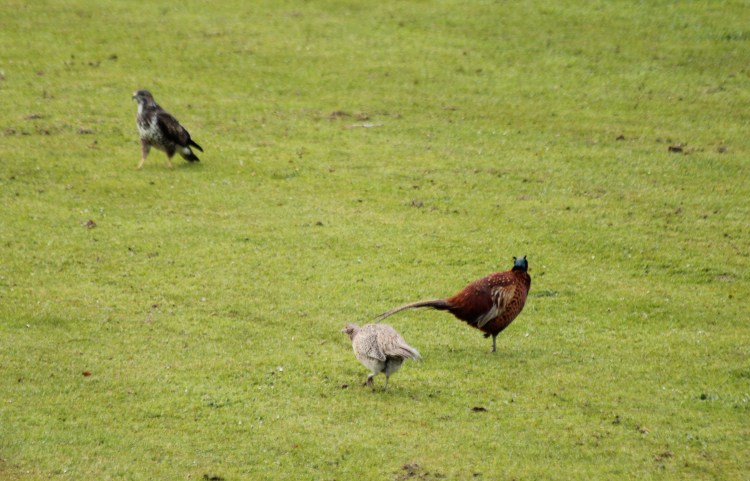
So why did DEFRA even consider this plan? If anything buzzards are absolutely beneficial to pheasant shooting, keeping their numbers down so there aren’t so many ‘surplus’ after the shooting toffs have put a mark on the amount they can either eat or stuff in a pit. And anyway, buzzards are more inclined to go scouting for carrion, swoop down on rabbits or pluck earthworms than bother pheasants most of the time. The buzzard in this picture (taken from my bedroom window) was far more interested in the former than eating the bystanders.

Once again, it is a sign of a government that doesn’t understand or care about nature at its core. Rather than spend money on making Marine Nature Reserves, increasing our wildflowers and pollinating insects, developing outdoor learning for schools or any number of beneficial ways of preserving our wildlife for both its own value and future generation’s, they try a stupid plan especially for the ‘elite’ of people who run our country. And as they’re not even considering netting over rearing pens, which would cost just as much or even less than the current plans, it shows predator-prejudice is once again the subconscious feelings at the heart of this. Buzzards join a long list that includes foxes, corvids and sparrowhawks, all species’ scapegoated to take the blame for many of the problems we’ve made.

But just as we stopped the forestry reforms, the public voice is the best way to stop these ridiculous ideas. Start by signing the petition, or even better contact DEFRA directly. We can’t let our supposed guardians of rural Britain prioritise some rich fat cat’s game over the far more valuable buzzards and the rest of our country’s wildlife.