Saving the natural world: Why we need more conservationsts
For the Birdfair

(Photos courtesy of our awesome team photographer, James Shooter)
“It’s like Glastonbury for birders!” some people say. And entering Birdfair for the first time this year, I can see where they’re coming from. Hoards of people descending from across the country to a small patch of mud-caked farmland, plenty of beer chugging, portaloos and a myriad of tents and stages sounds like any other music festival.
But then factor in that the tents are huge marquees showcasing wildlife NGOs, travel companies, publishers and optics; the stages host the big names in natural history rather than music; and rather than revelling youngsters it’s as if every British naturalist, birdwatcher and their dog has descended on Rutland Water. Stepping inside for the first time was an extraordinary, overwhelming experience. Wildlife watching can often seem a sedate and solitary hobby, but Birdfair completely scratches the record on that.
 Although it is a three-day event, the Friday was my only full day to explore the showground like a ‘normal’ visitor before my duties working on one of A Focus of Nature’s two projects here this year begun the next (which, incidentally, we’ll also hear more of later) – yet even in all that time, I’d barely seen all the stands I wanted to see, hear all the talks I wanted to hear or had the chance to eat enough to vaguely pass as lunch. By the time I finally did sit down – at an extremely good talk on what it really means as a person to be a birder – I could’ve gone to bed there and then.
But that definitely wasn’t happening, as immediately after the talk I met with one-half of the AFON creative quartet and good friends, Dr Rob Lambert and Lucy McRobert. We were swiftly caught up in the first-day drinks reception, and it was here that Lucy came into her own. Were networking an olympic sport, she would surely take unbroken gold for Team GB, and Lucy introduced me to personalities at ten-a-minute, snatching them off their conversations to shake my hand with the velocity of a starved spotted flycatcher.
There was, however, method in her madness – not only in widening my personal contact list with those working directly in the field of natural history and conservation, but to ‘enrol souls’ for that AFON project I mentioned. The project in question was the new promotional video for Birdfair, based around the theme ‘What does Birdfair mean to me?’ Celebrities, professional conservationists and the general public were to hold up a blackboard in mug-shot style with a word or phrase illustrating the above question, with additional sound-bytes from some of the more familiar personalities.

Playing ‘Bird Brain’
Lucy had assigned me as team leader for this film, which essentially meant making sure everyone knew what they were doing, gather willing participants to be filmed and report back to ‘HQ’ (ie. Lucy). The film crew consisted of four brilliant, talented young naturalists within AFON’s ‘youth’ demographic (16 to 30). On filming duties were Rebecca Hart and Hamza Yassin, two of the most level-headed and competent wildlife filmmakers you could meet. Meanwhile, stills and additional footage was captured by James Shooter and Alex Berryman, both AFON members and both undoubtedly two of the UK’s top young wildlife photographers. All four of these people have photographed and filmed wildlife to exceedingly exceptional level at home and abroad, so the film was in more than capable hands.
Day two, and time for work to officially begin on the video – but before the team met at 11, I had just enough time for a chat with my AFON mentor, Mark Avery. As both Britain’s premiere nature blogger and former conservation director of the RSPB, he’s one of the big apples of the UK wildlife scene. It was a pleasure to be able to spend an hour or so chatting away about the intense challenges conservation faces today and how you go about solving it, particularly within context to what I plan to achieve in my career.
In conservation, without guidance from those who came before you may as well not bother. The mentor has been a staple of all the great naturalists, and AFON’s own scheme is certainly one of it’s most valuable aspects.
Wishing Mark well till our next meeting (which was only a few hours later), it was time for the crew to assemble. Finally gathered after days of virtual text and facebook discussion, it was as we dotted ‘need-to-film’ points on the site map and check-listed all our potential interviewees in a vast hit-list of the country’s top naturalists, that it dawned even a 3 to 5 minute film was going to keep us more than busy enough over the weekend. (All this casually going on while Charlie Hamilton-James sipped a coffee on the other side of the table, so star-struckness wasn’t likely to be a potential concern.)
So from the word ‘Allons Y’, it was on to scour out the celebrities, conservationists and birdfair crew to provide soundbytes. It was very much a case of catch n’ grab, much like Lucy’s own tactics at the previous day’s drink reception. “Stephen Moss ahead, get Stephen!” “We’ve got Kane from WWT, have we got the people we need from RSPB and BTO yet?” “Filming Mark Avery at the foodcourt at half 2, but we need to grab Derek Moore first…” – you get the picture. Lucy once again proved instrumental in snaring some of the more elusive yet hugely popular personalities, switching twitching from ticking rare birds to rare celebrities instead. I’ll never forget the moment we were finishing up our lunch, when Lucy suddenly dragged a rather bemused Bill Oddie out of the VIP tent, offering him to us for a soundbyte like a birder saleswoman.
I’m happy to say however that all the people we interviewed that day, Bill included, were very happy to oblige, coming up with words on Birdfair that were variably enlivening, inspiring and occasionally downright hilarious – I’ll think I’ll let you wait and see what Bill Oddie and ‘urban birder’ David Lindo wrote on their blackboards till the video’s release.
With a huge quota filled, yet with a few more people to track down the next day – and that’s not even mentioning pick-up filming and including some of the general public – it was time to pack up and get a well earned Birdfair bitter (or was it the osprey ale?) The beer provided the perfect opportunity for all of Birdfair’s AFON representatives to finally meet in person.
Here, amongst the sea of old timers in beards and anoraks that seemed to proliferate the showground, was a group of young people which could just as easily be a gaggle of ‘yoofs’ at a music festival or student bar, but all on the same conservation-navigated boat. Jokes and anecdotes of uni life interspersed with serious discussion on wildlife issues. I suppose a key goal of AFON is to fuel a whole new youth movement for nature – that gathering in the food-court has already sown the first seeds.
The second, action-packed day at Birdfair subsequently ended on Ceri Levy’s ‘birthday bash’ to celebrate 25 years of the event. With extraordinary footage of voice choirs singing like wrens and pheasants (seriously look it up – Marcus Oates’ ‘Dawn Chorus’), the beautifully moving bird-inspired folk songs by Jackie Oates and nostalgic films dating back to that very first gathering of birders on Rutland Water in ’89, it was a charming look at the cosy and very close-knit community of birding, both scientifically and culturally.

The enchanting folk singer, Jackie Oates
As the third and final day dawned on Rutland Water, it was operation do-as-much-as-you-can-without-stopping for the film crew, and we were gathered before the gates even opened. As we had a lot on our plates, we split up – James continued to take stills across the showground, Alex did additional filming of the event, whilst Hamza & Rebecca caught any remaining personalities for soundbytes.
Initially spending the morning with these two, where we managed to get a very poignant word to end the film with on Simon King’s blackboard, footage of bird ringing in action and panoramas of the reserve from the rather splendid observation tower, I reconvened with Alex for the remainder of the afternoon for perhaps the greatest challenge yet – asking the general public what Birdfair meant to them.
While media personalities can work with cameras like they were they’re best friends since childhood, asking elderly couples sitting in the sun whether they would like to be in the birdfair promo film is a different story. I had horrible imaginings of every person we asked recoiling in horror at the idea, but thankfully, after a polite ask for permission and explaining as to what it was for and what they had to do, nearly everyone we asked was as willing and co-operative as Johnny Kingdom. That said, trying to sum up Birdfair in one word or phrase on the blackboard did prove a little tricky for most – trying to say ‘no pressure, take your time’ when there’s a camera eyeing you up, ready to roll does make you feel a little guilty sometimes!
With a variety of the great attendees of Birdfair recorded on film, it was a panorama of the que for the ice cream van that ended me and Alex’s expedition that afternoon, and with Rebecca and Hamza wrapping up very soon after, it was with a sigh of relief that we could say we had a film in the can. And so, as the completed and dazzling kid’s mural was packed up behind us, it was with hugs and bittersweetness that team AFON gathered for the last time at Birdfair 2013.
But what we’d done was far more than just the film. Birdfair is the ultimate way of showing that being a nature obsessive is far from an isolated interest, the sort of place where birders from all corners of the globe enthuse over the little egrets by the optics tent together, where you could talk to Nick Baker about harvest mouse surveys and the strange make of your binoculars as casually as you would with another naturalists on your local patch – everyone’s in the same boat at Rutland Water.
And of course, it really showed how A Focus on Nature, a project started only last year yet already with huge scope, is so important. Here’s to Birdfair 2013, and hope to see you next year – but keep an eye out for us AFON lot. This year you’ll have seen the mural, and soon see our film to prove our cred. I’ve gotta feeling we’ll be even louder in 2014…
STOP PRESS: It’s finished! Watch the final product here.
REVIEW: ‘Feral: Searching for enchantment on the frontiers of rewilding’ by George Monbiot
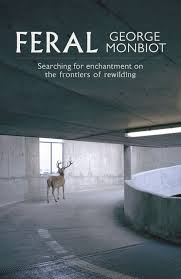 It was last Autumn that I read one of the most exciting pieces of natural history literature I have yet come across, The History of British Mammals, by the great mammalogist Dr Derek Yalden, who very sadly died earlier this year. Although it is a proper scientific text aimed at those with a keen interest in our native mammal fauna, it read like any great literary epic in my mind, chronicling the changing fortunes of our mammals from the Ice Age to the present day – and it’s what it had to say on the great megafauna that roamed our isles right into historic times that caught my imagination in the same way any piece of fiction could. The idea of wolves, lynx, wild boar and more roaming the woods beyond my garden once upon time has always fascinated me; complete with archaeological records and evocative illustrations, The History of British Mammals brought this almost fairy-tale like wild past into fantastic reality.
Now hold on, you might be saying, this isn’t a review of The History of British Mammals. But Feral is reads like a spiritual sequel to HOBM, and not just as a frequently-referenced citation. As a zoological reference point, HOBM had little opportunity to explore the wider implication of this untamed past of Britain – but with Feral, environmentalist George Monbiot does so with inspiring style. Of course, talking about the large mammals that used to be numerous in our countryside and the opportunities to bring them back is only a small part of Feral‘s mantra (it’s not just mammals anyway – just ask the giant sturgeons or dalmatian pelicans). For Feral is really all about accepting the true state of nature in a nation where it has become a distant commodity to be pruned and cut to anyway we see fit, regardless of whether we are trying to exploit it for commercial means or ‘protect’ it without really knowing what we’re protecting. The key word of course is ‘Rewilding’, both of our natural history and ourselves. Continue reading
Independent Blogs: Conservation Volunteering with Elephant Human Relations Aid

My piece for the Independent this week looks back to my time with Elephant Human Relations Aid in Namibia (nearly five months ago now – can’t quite believe that), promoting their excellent work and hopefully encouraging more to join in.

Last Flowers in the Woods?
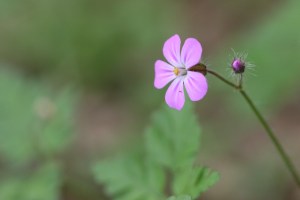
It’s the turning point for the ground flora in my local patch, Beggarspath Wood – though it is about a month late given this year’s strange weather. The bluebells that provide such a marvellous purple dazzle across the woodland floor, returned without fail this year lasting well into June. Now however that prolonged ecstasy has come to an end, the sweet-scented blooms becoming a slimy, flattened layer of humus. It’s very much the beast to their earlier beauty. But their seeds have been sown for next year, and the humus itself is rich in nutrients that will ultimately benefit all the organisms within this ecosystem’s community.
Before the bluebells of 2013 disappeared however I was out to fetch my annual quota of shots, this year trying some originality by lying on the woodland floor, creating a ‘bug’s eye view’ of looking up into the bluebell. You can measure the success of this below (along with some more traditional compositions.)
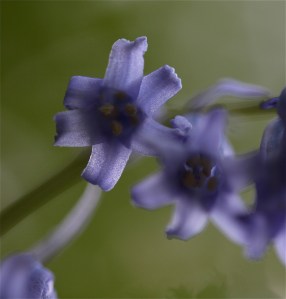

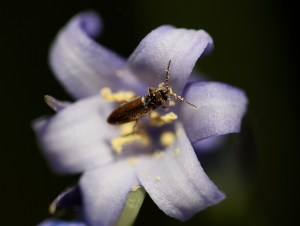


There were others among the bluebells – plenty of red campion (pictured at the top of this article), speedwells, stitchworts and ground ivy, pushing through the few gaps left unfilled by their more obvious neighbours. Most have still lasted through, but if Spring was the time of the bluebell then Summer belongs to the bracken. Such plant monocultures plague across the woodland floor, restricting the diversity of other flower species and their dependent species.
For these single-species forest floors are not what you’d naturally expect to find – the reasoning is highly likely due to the extinction of wild boar from our countryside, the only animal capable of eating bracken and who’s rooting activities both prevent one species becoming dominant and enriching the turnover of nutrients in the soil. Subsequently, a rainbow palette of woodland wildflowers, tall and iridescent in their health would decorate our forests. If boar were to return nationwide (which, if their current spread continues unabated, could be the case in 20-30 years) we may not have the bluebell carpet, but perhaps the alternative would be even more beautiful.
Food for thought when you go out to enjoy the bluebells next Spring.
Nature Diary: Winnall Moors, 14th June
Settled right on the edge of Winchester and barely a stone’s throw from the historic city’s centre is Winnall Moors, a wetland oasis of lush reedbeds, marsh and wet meadow fed by the River Itchen and it’s winding tributaries. Historically used as grazing meadow, the Hampshire & Isle of Wight Trust restored it back to biological glory whilst providing sensitive yet engaging access to the public as a nature reserve, creating a rich biodiversity from the otters that fish along here and through the city at nightfall, to the scarlet tiger moths that flitter among the yellow flag iris at summer’s height. And all of it free for anyone and everyone to experience.
Leaving behind the city and re-aquainting with nature as I walk in on this heavily overcast and rather showery June day, it is like catching up in the pub with a friend whom one sees far less frequently than before. Whilst in my A2s attending the local sixth-form college last year, I would drive down to the reserve every Friday after finishing my day’s lessons at quarter to three, spending my time just wandering with my camera and binoculars before picking up a friend who would finish his college day two hours later.
Since finishing college last summer, it’s become harder to find the time to come down to Winnall as often as I like – despite being on a year out, near-daily work and volunteering commitments and the constant bugbear of fuel saving mean that when I do get the chance, such as today, the visits are fresh and almost feel as new as when I first found this gem. I’ve only just entered through the wood-carving arch and already nature abounds – a bloom of buttercups, marsh saxifrage and ragged robin adorns the grassy bank at the entrance; mayflies are scattered across the wildlife trust’s information panel, including one newly emerged subimago individual, the husk of it’s adult form still left behind; and a shower of seeping calls cascading down the river hails the arrival of the kingfisher, shooting above the bank as if someone has launched a shard of sapphire from a cannon (the kingfishers are breeding, and the wildlife trust has set up a camera into their nest). More self-centred folk may call this a welcome, but such early ecstasies are just part of the everyday package when it comes to Winnall Moors.
Heading North along the edge of the reserve, I come to my favourite walking track within the moors. An almost islanded thin strip of land, the path is sandwiched between two tributaries, on the right managed as part of the reserve and the one to the left belonging to the adjacent recreation ground. The contrasts between the two are striking. Where wildlife is the priority, the banks are an explosion of colour and greenery. The edges of the stream are impossible to see so rich is the vegetation, which themselves are alive with the songs of reed buntings and sedge warblers, and brown trout are visible drifting placidly in the clear waters typical of a chalk-based wetland, remaining stationary in the current with a demeanour rather akin to a bored pensioner waiting at the bus stop.
On the other side, maintained for ‘public leisure’, the banks are compacted and guarded from any sort of growth by neatly aligned wooden girders. If the reserve stream was the hedgerow, its neighbour’s little more than an A-Road. How anyone thinks this is more appropriate to a setting designed for people to relax than one where wildlife can flourish goes beyond me.
Carrying along the bank, eyes to the right, I’m searching for the sight that always proved to be the highlight of my Friday afternoon visits to Winnall Moors – water voles. Their relative abundance here is an illustration of what most rivers and streams would have once been like across the country, before the ‘tidying’ of river banks as shown in the recreation ground and the introduction of mink took their toll. But it isn’t long before the ‘jizz’ of the water vole (to most naturalists this is the term used to identify a brief bird sighting going by certain characteristics, but can apply just as well to mammals in my case at least), a flash of brown in the corner of my eye just a small shade paler than the soil of the bank, rapidly paddling down towards me along the stream’s edge at a rather static pace like a fluffy clockwork toy on the water’s surface. With myself remaining still, the vole stops briefly to pluck a rather large blade of old reed from the bank, before carrying on past me and down the way I came with his newfound prize clutched in his incisors as a dog would swim with a stick.
It’s not long after this sighting that the rain really begins to fall, and despite not having anything vaguely waterproof to wear I linger on to the wet meadows at the end of the reserve – the city is barely visible here, just the famous cathedral looming distantly over the reeds in the South, and to the North woods and hills forming as the South Downs ‘begins’. Whilst I may not be able to come here as often anymore, and even less so once I begin university, it makes those savoured opportunities when I can all the richer.
The First Dark Day
So it’s come to this.
On this day, June 1st 2013, licences are to be handed out that allow farmers and landowners to cull badgers. Initially in two cull zones within Gloucestershire and Somerset, but almost undoubtedly to other parts of the country in the future.
But this is just one of so many dark days for Britain’s wildlife if such policy-making continues as it is. Unable to see anything in reality without some financial value to it and greedy with the power of control, the people supposedly looking after our environment and ecosystems as written on paper are perpetuating its ongoing decline.
There’s the indirect methods – intensive agriculture, mismanagement of forest and marine ecosystems, urban development into sensitive areas – such things, driven by our government’s ongoing drive with nothing but money on the mind (generally for themselves and their chums) pushes huge declines in over 60% of our wildlife, as the staggeringly bleak State of Nature (and read the whole paper, not just the summary) reports.
Now it seems that the country sportsmen ‘in charge’ of nature are bringing their hobby to policy, covering the ears against the protests of scientists, conservationists, a large majority of the Commons and the public under a smokescreen of out-of-the-hat reasonings that a ten year old could question. The protests aren’t just hippy tree-hugging for the sake of it. I, and most other people with an interest and knowledge in nature, accept that in some though often rare circumstances culling can be the only option, deer being the obvious example. But there is no excuse here. Culling badgers reduces Btb in cattle at a best outcome by only 16%, leaving farmers with huge numbers of their stock still falling to the disease, and vast losses of badgers will only be joining their vast losses of money. If they had just topped up the biosecurity, cleaning water troughs regularly and isolating sick individuals from the herds, it may have just ticked over nicely for a few years whilst a vaccine for cattle was developed.
But DEFRA head Owen Paterson ignored all the scientifically-backed advice given to him, and the result is the first licences given out today. Wildlife doesn’t just fall to planning and land policies now as un-targeted casualties. The Badger has become the first official ‘wild scapegoat’, a way for Paterson to get around his own department’s failings and blame it on something outside societal influence (as illustrated superbly in Lucy McRobert’s article), as well as going towards getting some of those pesky wildlife protection laws out of the way so his ‘real countrymen’ have something new to shoot.
Because with every new wild scapegoat, they’ll be far more losses outside any cull’s legal parameter. Already, illegal destruction of badgers and their setts are on the rise. It’s scary just how commonplace it is. When I was investigating the nocturnal rootings of badgers in the lawns of a local stately home, the land-keeping staff of the estate, hardened country-folk who had seen so much of the natural environment change in their time, were completely casual about what they’d been told by contemporaries elsewhere on how to deal with badger problems. “They just say gas ’em out or stick poison down, then just dump it on the road when you find it dead and no one’ll even bother to notice.” Thankfully, the ones at this particular estate would have none of it, opting for tighter security to keep badgers away from the ornamental lawns. They accepted badgers as part of the countryside they loved.
But elsewhere it is a different story, and the cull will make many feel it far more acceptable to kill badgers. Wildlife crime is hard to monitor, the police keep it low priority and the wildlife crime unit is badly underfunded. The illegal activities mentioned by the keepers on the estate that are already going on are taking an increase as the cull brings them one step closer to being able to get away with it. I monitor over a half a dozen setts in the New Forest, noting down the state of them and the activity of it’s inhabitants for the local badger group. But a serious part of our work now and other groups across the country is ensuring the setts are intact, and watching out for suspicious activity. You’re not just a naturalist but a security guard, the pleasure of watching badgers mixed with apprehension as I never know if the next time I visit, there will be none to see.
Badgers, and potentially many more wild scapegoats – buzzards seem next – are likely to go under disturbing extermination programmes, official ones then spiralling off into the ‘DIY’ attempts elsewhere. As I write this, protesters will be marching to Westminster, but it has come too late. Wild scapegoats are becoming just another brick taken out of the unstable wall of our natural heritage.
It’s up to us – those who aren’t in charge, but know about how things work, and crucially actually care for nature – to try and stop it.

Blogs for the Independent: Pangolins in Peril
An illegal trade just as devastating, and to the same markets, as that of rhino horn and elephant ivory. It threatens to wipe out entire species’ of pangolin, the likes of which have been unique and unchanged for over 60 million years.
But did you even know what a pangolin was? You’d be in the majority if you didn’t. And that’s exactly where the problem lies.
Nature Diary: Fishlake Meadows, 22nd April
“Summer is icumen in, lhude sing cuccu!”
Such is the ecstatic opening passage of the famous medieval folk song ‘Summer is Icumen In’, glorious words which in their old english dialect glug from the mouth like a cool and thick ale out of the barrel. They have become stuck in my head since my brother first discovered them, and since seems to recite it on any bright day walking in the country where bird song is rife, regardless of whether the ‘cuccu’ in question is present or not.
But on this afternoon, it is here. My brother is not, so its up to me to recite the olde english ode to its arrival. Sitting in the highest possible perch in the tallest poplar, the cuckoo sits like the conductor to the orchestra to the reedbeds below: Upon seeing it in the distance, his ‘cuc-koo’ call that everyone can recognise since childhood seems the dominant cry in the first quarter of the meadows. Here the wet grass is dominant and the reeds and sedge short – murmurs of birdsong emerge from here rather than symphonies, where the song of one livens the background level of sound instead of being an integral part of it.
But pass the row of poplars in which cuckoo sits into the heavy cluster of reeds behind his back, and his orchestra comes alive. It is a chorus of birdsong integral to the British spring and summer, yet one that not many will recognise given it’s distance from the woods and our gardens. The warbler orchestra is savoury where the woodland songbirds are sweet, but just as two wildly different music genres can be equally beautiful, so to are the songs of the sedge, the reed and the cetti’s warblers. The reed is the more unsure of the three’s songs, a sharp crackle that sounds like a once-fluid note has been broken into pieces; in Mike McCarthy’s excellent piece of writing on our summer migrants, Say Goodbye to the Cuckoo, he notes how naturalist Mark Cocker describes the reed warbler’s song as sounding nervous “I-I-I-can’t-can’t-quite-quite-get-get-get-my-words-out-out-out”. A remarkably apt description.
Then there is the sedge warbler, and if the reed was the unpopular kid lacking confidence in the classroom, then the sedge is the extroverted king-of-the-playground everyone wants to be friends with. From a high-pitched tweet to a rasping grate then a bubbling whistle in a matter of seconds before it starts over, the variety of the sedge warbler’s song makes it stand out in star billing.
That is until the cetti’s warbler decides to make himself known. This small, inconspicuous bursts into the chorus from his place of hiding without warning, and pierces it like a needle in a balloon. It’s short, sharp and loud call is more akin to ‘typical’ birdsong in sound, but in rhythym sounds like someone of a large degree of importance stepping up to the front and declaring “Right – I’m – GOING TO RABBIT ON, GOING TO RABBIT ON, GOING TO RABBIT ON!” In appearance the cetti’s may be unassuming – a typical ‘little brown job’ – and keeping itself hidden away under the reeds and brambles. But its unmistakable voice makes it more than a memorable cast of this ‘warbler-chestra’.
Of course, the idea of this orchestra of warblers welcoming the warmer weather with song is just another anthropomorphic musing – in reality, it’s a fierce competition to establish their territories since arriving from Africa, so perhaps a riot would be a more apt term. Even the conductor cuckoo is of a darker nature to our eyes. There’s a reason they are common in reedbeds, given the plentiful supply of nests from their favoured host species, the reed warbler. But then, nature was never meant to be taken quite literally – it has guided and inspired us, even if what we perceive isn’t the reality. The cuckoo isn’t signing in jubilation of warmer days and better harvests – but where would our jubilation at spring’s arrival be were the cuckoo not here?
 Pete Cooper Wildlife