Welfare not Warfare: The core reasons behind the fox hunting ban

fox-hunting-2

There are many reasons a new, all-tory government is bad news for wildlife and the environment; badger culls, land privatisation, fracking, and umpteen other reasons that trickle off the priority of ‘protecting(sic) hunting, shooting and fishing for all the benefits to individuals, the environment and the rural economy that these activities bring’ that this government considers essential in this department. It would demand a series of blogs, or a new blog entirely to cover it any justifiable depth.

But one clear elephant in the room that has been looming uglily for the last five years, and is now likely to be set loose without the staying hand of the Lib Dems, is the repeal of the fox hunting ban. Cameron has not hidden his disdain for the ban – “I have always been a strong supporter of country sports. It is my firm belief that people should have the freedom to hunt, so I share the frustration that many people feel about the Hunting Act and the way it was brought in by the last government”. While any repeal will be granted through free vote, and there are still a significant majority in favour of the ban, the possibility that this out-dated blood sport will return to hunting foxes rather than scent-trails in our countryside is by no means out of the picture, especially when one considers the influence its supporters maintain.

Whatever the outcome, the debate between ‘pros and antis’ is set to become increasingly virulent over the next few years. In this blog, I’ll be positing frequently-spoken justifications by those in support of the ‘sport’ – and in reply, the rebuttals of myself and I’m sure many others. Sentimentality and overly-emotive comments can dilute debate on both sides of the argument, so I’ve tried to be as evidence minded and ‘as it is’ with my views. I don’t expect most pro-hunt types to change their views whether they read this or I speak to them in person – but I do want to make clear that ultimately, any reasoning for fox hunting comes from the self-centred benefit to the individual, rather than being a holy bastion so desperately required in our countryside as is oft claimed.

“There are too many foxes, and they’re evil creatures – they killed all my chickens despite not eating them. They have to be controlled.”

 Yes, there are a lot of foxes. It’s estimated there may be between 256,000-260,000 of them in the UK (of which many are urban), and it’s likely that the extinction of large predators in Britain may well have lead to an effect of ‘mesopredator release’ as had been recorded in Sweden, in addition to the large number of rabbits in our countryside. However, outbreaks of mange do regularly keep populations in check.

Regardless, foxes can take large numbers of poultry, often killing all in one go. This may appear barbaric, but by applying such anthropomorphic tendencies to the fox, pro-hunts can apply just as much judgement-clouding sentimentality that they accuse antis of having. In reality, this ‘cacheing’ behaviour is common among carnivores wanting to ensure a larder of food is available to go back to – a much more energetically economical solution than constantly being on the hunt.

Is this enough reason to control foxes though? Indirectly, foxes probably provide £7 million annually to farmers through rabbit control. Yet this still provides little consolation to the farmer who’s just lost an entire chicken coop twice in a row – if all security defences have failed, ‘problem animals’ are present or the density of foxes in the area is high, then lethal control may be a suitable option. This is not reserved to farmers though, as conservationists trying to protect rare ground-nesting birds will also resolve to this in similar scenarios – NGOs such as the RSPB and WWT do not hide the fact they do this.

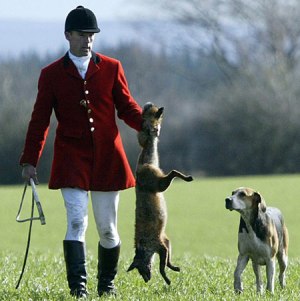
The key matter here though is welfare – if you have to kill a fox, do it stealthily, quickly and humanely. If this has to be done in the breeding season, then take out the cubs as well as the mother under the same circumstances so they do not starve – given the difficulty of this, it’s even better if you don’t kill mothers with cubs at all. Why fox hunting simply has no place here, regardless of how much of a problem foxes are, is chasing down an animal over a huge distance, exhausting them to the sound of horns and baying hounds, and finally ripping it limb from limb can never, ever be considered humane. You would not wish farm animals to suffer when their time comes at the abattoir, and foxes are no different.

 “But the dogs and horses love it. You’re just depriving them of a good life!”

 I’m sure the dogs do benefit from the thrill of the hunt. But does that mean the many dog owners across the UK with breeds originally bred for hunting are depriving their companions of such an important factor to their quality of life? Hounds may not get to rip something to shreds after a trail hunt, but if it’s all about the chase why is this so different?

And I’m not a rider so can’t judge for horses, but as a grazing herd animal that gets just as much benefit from a canter out in the country, you’re not going to convince me on that point.

 “But it’s tradition! You’ll just tear down the rural communities in ways you lefty urban Guardian readers can’t understand!”

 So was badger baiting round the back of the pub and public hanging in the square. I wouldn’t be surprised if many hunt supporters show disdain of bull fighting in Spain either. Whatever the case, we’re intelligent enough to realise that eradicating suffering should always be priority over preserving tradition. This is nothing to do with my political standing or where I live (which is in the countryside, funnily enough), it’s a matter of judging right from wrong.

 “You just don’t understand the ways of the countryside.”

 A highly offensive statement every time I hear it, as someone born and raised in it. A naturalist is as much country-folk as the farmer, the fisher, the gamekeeper or the B&B owner. The notion that in order to be ‘proper country folk’, you have to enjoy or at least positively support killing some of it’s inhabitants – largely those that don’t fit inside the ‘pretty’ model of songbirds, butterflies and the like – baffles me, and I think comes from an innate mindset of keeping the countryside a predominantly industrial landscape, as ‘manscaped’ as any urban area despite the disdain shown by many rural dwellers for such places. The countryside never required a band of red-coated persons on horses galloping after foxes to tear them to pieces.

“Well, it’s all about class at the end of the day, isn’t it. Bringing down those more well off than you.”

 No. I don’t give a damn if it’s the Prime Minister or a Bin-Man riding atop that horse. This is clearly, undeniably, about animal welfare, not class warfare.
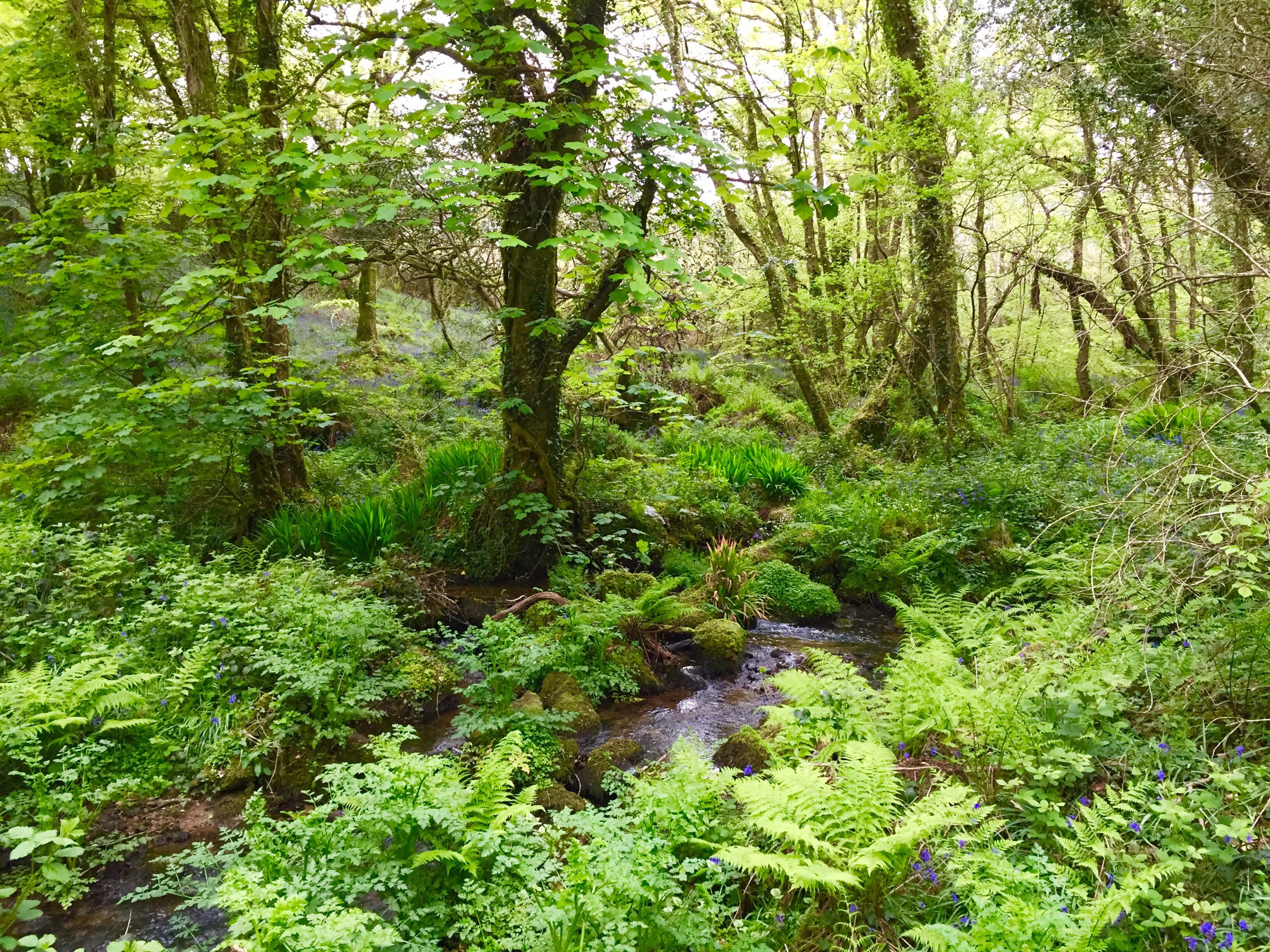
 

Nature Diary: A Cornish Wood, 10th May

I often bemoan the fact that despite being fantastic in pretty much every other way and a place I am proud to call my other home, Cornwall is lacking in ‘proper’ woods. As a woodlander in spirit, raised crashing through bracken, climbing trees and dined upon by ticks in the great ancient woodlands around Romsey and in the New Forest, the offering here is more limited. The coastal, blustery nature of this peninsular county makes it difficult for any tree higher than a Shetland pony’s shoulder to grow, and any spots of woodland that may have managed to survive this and the chop-chop attitude of Neolithic farmers are battered and have a distinct ‘will that do?’ quality to them. The wild and rugged setting may suit Ross Poldark getting his shirt off and smouldering out to sea, but it’s bloody irritating if you’re an oak tree.
  
The exception to this rule can be found in the river valleys, and a quick scan of a satellite map will reveal these perusing across the agricultural green quilt like moss-green blood vessels towards the sea. These woodlands were pointless to deforest and cultivate given the steep-sidedness of the slopes, and the shelter from the cold and wind creates warm and humid microclimates, leading to temperate rainforests distinct enough to be classed as ‘Atlantic Oakwoods’. As their name suggests, these climes are exploding with life and colour in comparison to the relatively barren pastoral fields around them, and yet they frequently remain conspicuous and unassuming on the outside. It’s a bit like stumbling upon a psychedelic music festival in the middle of greyest, bleakest Birmingham*.

One such wood is my own ‘secret’ location. I initially found it some three years ago while staying in a B&B nearby, and later returned there after moving to Cornwall for university. Accessed from a standard Cornish country lane narrow as a tractor, the wood isn’t public access and I suspect I’m probably trespassing, but that just makes it even better. I’ve never stumbled across another soul while out here; this is the closest I feel to entering a world devoid of civilisation in this Western corner of the country. Continue reading

Nature Diary: College & Argal Lakes, 10th March

Copyright RSPB

Copyright RSPB

I’ve witnessed the slow coming of Spring 21 times now, yet the passage of time, of which a large part of it seems to have been spent in a perpetual waiting-room gloom of winter, makes it seem as fresh as if it were the first. I’ll probably keep writing about it each year too, and you can add ‘groan at Pete’s unoriginality’ to seasonal staples like Christmas, Eurovision and a new series of Game of Thrones. But as it is in my view the most wonderful and obvious illustration of the shapeshifting face of nature, it’s a tradition I’m happy to keep up, as each year seems to bring a new perspective to it.

No sooner have I crossed the terrifying B-road of death and gone through the gate into College Reservoir nature reserve, that I am welcomed by the twittering of songbirds, like the sudden wall of chatter one encounters the moment they enter a pub. A curious robin peered and bobbed around me methodically from branch to branch, perhaps in expectation of a mealworm or two to be launched from my pocket. To it’s left, more delicate ‘seeps’ and flashes of black, white and rusty pink could only mean the presence of long-tailed tits.

Fixing my binoculars on one of the pair proved difficult – the birds seem to resemble feathery ping-pong balls not only in shape, but also locomotion. Once they stayed still for long enough however, I could see how dashing the increasingly brighter sunlight of Spring cast them, and on a less poetic note, inspect they’re legs to see if they were ringed – many of the songbirds in this area have been mist-netted and subsequently adorned by academics at my university. While this was not the case, I noticed tiny pieces of lichen in their beaks. To my delight, I watched as each bird in turn flew into the crux of a gorse bush, where bit by bit a very comfortable looking nest was being constructed.

At this point it was similar in size and shape to half of a large orange, made out of particularly fuzzy mosses and lined attractively with the lichens being gathered. As one tit returned with new material, it was locked and stitched in with the precise care of someone brushing out the folds in a newly laid bed-sheet, and it would then turn around and vigorously shift up the moss with its backside. Eventually this nest will form a neat, rounded dome to form what is perhaps one of the most charming of all bird nests. Although I could not see any myself, long-tailed tits are famous for lining their homes with spider webs, the strong and sticky silk providing ideal natural foundations.

After checking the stream below for otter spraint (none today) and a quick scan of College Lake (couple of grey herons, groups of teal, coot and canada goose), I made my way back through the woods towards Argal Reservoir. Both College and Argal are man-made lakes built to fulfil a functional purpose in water supply, and standing on top of the dam wall that gives you the best panoramic view of the latter gives you a humbling sense of the engineering ingenuity that has created this, water tumbling over a 50 foot drop from the sluices beneath your feet.

Despite the dam initially appearing like another triumph of utilitarianism, the reservoir has created ideal habitat for waterbirds. Scanning the horizon with my binoculars, what appear to be model viking longboats from a distance reveal themselves to be great crested grebes, their swooning necks and handsomely feather-crowned heads occasionally disappearing below the water line on foraging dives for weeds. At this time of year pairs will be courting with their famous, synchronised dance. I kept my eyes fixed on the birds, but of the four in view, none seemed interested in ‘setting a date’. Continue reading

A Sunday Thought

On this Sunday afternoon, staring out the window of Beerwolf Books as I procrastinate off doing uni work, odd thoughts drift in an out. For some reason, one of those is life after death.
I’ve never really been overly concerned with the concept since I was very young – ironically, it was perhaps when Auntie Barbara, one of my earliest mentors in introducing me to the wonders of wildlife, died when I was 12 years old that I was happy to accept death was death, and it was what someone achieved in a life that mattered. I don’t believe in any sort of afterlife, and equally I don’t believe in nothing. I just accept we don’t know, and it’s best to worry about the here and now, like whether we could see pine martens translocated into English woodlands by the end of the year and whether to drink tea or coffee depending on the time of the day.

But our mind is a door any thought can walk into, and so life after death did today. To which I was reminded of one of the most fascinating passages I’ve read on the idea, in one of my favourite books about my favourite conservationist. The excerpt I was pleased to discover is copied word for word on wikiquote, which to spare you the search I will post here. It relates to the experience of the author of Gerald Durrell’s biography, Douglas Blotting, who while researching the book several years after Durrell’s death in 1995 witnessed something very curious indeed. Make of it what you will.

I returned to Corfu, staying with friends at the small coastal village of Kaminaki, not far from Kalami, while I researched the life and times, haunts and homes of the young Gerald and his family on the island. The season of the festival of the fireflies – that fantastic insect spectacle so vividly described in My Family and Other Animals – was long over. What happened at Kaminaki one stifling moonless night was therefore doubly odd.
I had been dining at the taverna on the beach with my friends, and stayed on after they left, engaged in a desultory conversation with strangers. By the time I started for home it was pitch-black, and I could not find the gap at the head of the beach that led to the ancient paved track to the house. As I wandered up and down, uncertain where to go, a tiny winking light, a curious, incessant, electric neon flash, suddenly appeared at chest height about three feet in front of me. I took a step towards it, and it backed away by the same distance, then hovered, winking steadily.
It was a firefly, I knew. But it was odd that it was around so late in the year, and so alone; and odder still that it should appear to be relating, or at least reacting, to a human being in this uncharacteristic way. I moved towards it again, and again it backed away by the same distance. And so we proceeded, the firefly always at chest height and three feet in front of me. I realised I had been led through the gap in the beach that I could not find, and that we were at the foot of the ancient track. Guided by the firefly I walked slowly up the invisible path, step by step in the total darkness.
Halfway up, the firefly stopped and hovered, winking vigorously, until I was almost abreast of it. Then it made a sharp turn of ninety degrees to the left and proceeded up another, shorter but steeper path, with me trustingly trudging behind. It stopped again, and I realised I was at the garden gate of the house where I was staying. The firefly went over the gate, and I followed it across the unlit patio. The kitchen door was somewhere there in the dark, and the firefly flickered unerringly towards it. As I reached for the doorknob the firefly fluttered up and settled on the back of my hand, winking the while. I was home.
Was this normal? I asked myself. Were fireflies known to behave in this way towards people? I lifted my hand up to my face and peered closely at the wildly signalling minuscule organism. As I did so, I heard the voice of one of my friends, who, sitting silently in the dark, had witnessed everything: “Good … God!” I blew gently on the firefly, and it rose, turned once in a flickering circle, flew off into the tops of the overhanging olive trees and vanished into the night.
“You realise what that was, don’t you?” my friend said. He was a distinguished political journalist, and an eminently sane and sensible man. “Gerald Durrell keeping an eye on you, lending a hand, helping you home. No question about it. I think I’d better have another Metaxa after that!”
Every Corfiot Greek I told the story to nodded dryly and said matter-of-factly, without a hint of surprise, “Gerald Durrell.”
Gerald always believed that if he survived in a life after death it would be in some form of animal reincarnation. He had hoped it would be something fun – a soaring eagle, or a leaping dolphin – but perhaps a firefly would do at a pinch.
Make of this visitation what you will, there is no doubt that Gerald Durrell’s spirit does live on in one way or another – in his books, in his zoo, in his ongoing mission, in the natural world he has left behind.”


World Pangolin Day, and a little announcement

pangolin

Did you know it’s World Pangolin day today? Do you even know what a pangolin is? Did you even know it was a Saturday?

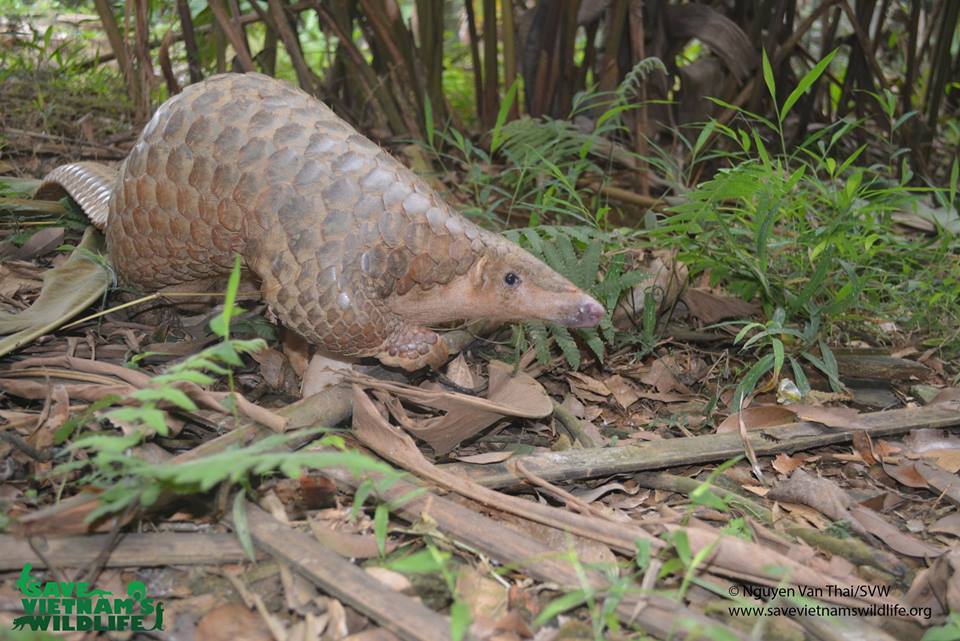
If the latter applies to you, I’ll let you off as a cause lost to the world, but the second question is all to frequently answered with an awkward shake of the head. You can start by looking at the photo above: that chap there is just one of eight species of pangolin (four in Africa, four in Asia), remarkable, characterful mammals that look the result of a night of passion between a podgy anteater and an amorous pinecone, bearer of a long dextrous tounge for investigating ant nests and an evolutionary body plan that hasn’t really changed in the last 60 million years or so. Lewis Carroll couldn’t have dreamed it up himself.

If something that fantastic still remains mostly unknown to the world, today’s day of awareness raising makes a lot of sense; but there’s more to it than that. Pangolins are being abducted from their forest homes in Asia at a rate which is difficult to monitor yet sickingly staggering when you consider the seizures that have been made by authorities; a single smuggled cargo of pangolins can carry up to six tonnes of the animals, and those are just the ones that are caught. They are being decimated in the hundreds of thousands, and all to fuel the same market of rich, South-East Asian consumers notorious as the root of more publicised illegal wildlife trades in elephant ivory and rhino horn. Although the pangolin is subject to paper protection in the countries where it is consumed, go to any market or classy restaurant in Vietnam, Laos, Cambodia, and you will find pangolin meat, scales, even foetus soup, on the menu with waiters all to enthusiastic to serve it to you.

The fact so few seem to be aware of this is in my view as disgusting as the trade itself, and it’s something I’ve been wanting to rectify in as much capacity as possible for the last few years. I covered the issue two years ago on the Independent largely as I was trying to reach a much larger and ‘unconverted’ audience as possible than one can achieve with a personal wordpress. But this World Pangolin Day, I’m happy to announce a very exciting project to keep track of over the next two years.

Having gathered a team of seven fellow students from the University of Exeter Cornwall Campus & Falmouth University, this Spring we will be launching ‘Ferae Vietnam’ – an eight week expedition to take place over the Summer of 2016, where our aim will be to survey and study populations of elusive mammals within the Ferae clade (pangolins and carnivores) in conjunction with NGO Save Vietnam’s Wildlife, and at the same time we will be filming a documentary on our research and the terrible plight faced by the pangolin – the aim is then for the film to be marketed as widely as possible to both Western audiences, and those in South-East Asia who may otherwise consume them.

It’s early days, and we will be launching the website and an introductory film within the next month or so. But it’s the start of an exciting journey where I hope to make some kind of difference to the future of these wonderful mammals.

The Devon Beavers: Brave New World?

Copyright David Plummer

Copyright David Plummer

Three weeks ago, a historic decision in UK conservation was made by Natural England. Having escaped or been released some years ago, the first family of wild English beavers Castor fiber since the species’ extirpation from our shores in the 16th century were allowed to remain swimming, gnawing and damming away to their hearts content on the River Otter in Devon, rather than being trapped by DEFRA’s equivalent of the child catcher from Chitty-Chitty Bang-Bang and subjected to captivity (not that any of the zoos wanted them). In order not to starve the bureaucrats of some management and paperwork to let them pretend they were still in charge of things, this is all part of a five-year trial akin to the Scottish beaver trial (currently over and under review) after which they could theoretically be removed if they don’t ‘behave’.

Continue reading

The Conflicts of the Conservationist Carnivore

From day 1, I’ll admit that I’ve been a rather ravenous meat-eater – the smell of bacon in the morning produces a lusty euphoria in me, roast beef with all the trimmings is the epitome of a perfect Sunday, and if I had to eat one last meal before the apocalypse, it would be steak (medium rare, with a pinch of garlic butter.

Naturally, this has come with the usual questions throughout life of “if you love animals so much, why do you eat them?” The answer has moulded and developed as life goes on, with the statements “we’re designed to eat meat”, “it’s essential for the protein” and (rather blandly) “it tastes too good” all being battered about.

Yet as time goes on, many carnivore conservationists such as myself become increasingly aware of facts that essentially make these above excuses rather redundant, and I now find myself at a bit of loss when I try to think of a scientific reason as to why we need to eat meat when discussing the issues with vegan/vegetarian friends – quite simply, we don’t. Protein isn’t sacredly bound to an animal’s flesh, and while we may have evolved eating meat, we also spent our early days cannibalising neighbours we didn’t like. Continue reading

2015’s natural motivator

‘Fssh, fssh, fsssh… fssh, fssh, fssh… fssh, fssh, fssh…’ if you’re a bit confused, which you are, that’s the sound of one of the most amusing and quite simply nicest wildlife moments of last year. A badger was shuffling backwards with a huge heap of dead leaves between it’s back legs and forepaws in a characteristic manoeuvre, resembling a cross between a dog trying to relieve itself of worms and a drunk doing the rowing dance to ‘Oops upside your head’. Once it had descended into its sett to dump this load of fresh bedding, it was back outside to repeat the process continually for at least another hour and a half, providing a constant source of entertainment on this evening’s sett watch in the New Forest. (Which reminds me that I need to send over last season’s data to the badger group by the end of the month – sort that out later)

2014 was yet another year in a trajectory of increasing annual awesomeness that I hope doesn’t stop anytime soon. Another year which has been more eye-opening, full of adventure, new people, knowledge and progression than the last. This has been the case (bar a couple of real dud moments) personally and emotionally, but as this a wildlife blog rather than one on lifestyle, love and instagrammed pictures of meals, it’s what I’ve gained from my natural life’s calling that provided the real fruit of what to write home about.

If there was one thing you notice as a conservationist, it’s that as each year builds up on your understanding of the issues we face as they become more far more prevalent. As a result, you can either become more depressed, or more invigorated to fight harder for it. For most it’s generally a mix of the two, though thankfully with a leaning more towards the latter. These are feelings more thoroughly explored in this post from September, and my new role within the committee for youth conservation movement ‘A Focus on Nature’ certainly put a great emphasis on this throughout the year, all boiling up to our rather splendid gathering of over a hundred young people speaking up for nature in Cambridge on the 9th September.

This year however, there was a particular defining moment that summed up exactly what nature could achieve if we just stepped up a bit more for it. It wasn’t a conference, or a discussion, but four weeks of my life carrying out wildlife research in the Tanarva Mare region of Transylvania.

romaniaday

Here was a landscape barely changed since the days it was being battled over by Saxons and Turks – beyond the quaint valley-bottom villages with their playbox farmyard-homesteads, rolling wildflower meadows bloomed with a pyschadelic blossom of innumerable creatively-named flowers and orchids. Wasp spiders wove their webs between these, and every footstep was an arthropod firework of bush crickets and grasshoppers. Rasping calls of red-backed shrike pierced the heat haze of a burning summer afternoon, replaced by the crek of the corncrake come the cool descent of evening. At this time, all kinds of creatures would come a stirring from the slumber from the shadows of the woods above – including the great brown bear, a creature faded into fairytale for us but very much a regular suspect in these foothills.

romaniawoods

The key word to sum up the wildlife of this region was ‘plenty’ – but what made this place stand out from other parts of the world I’ve been to, equally bounteous in nature, was how it could well have been Britain not so long ago. Plants and animals we know well and take for granted from our countryside lived plentifully alongside those we now regard as rare or threatened (such as the swallowtail, sand lizard, pine marten and woodlark) to those we’ve completely wiped out back here – stand up bears and boar. Yet this was no civilisation-less wilderness: it was somewhere people were living and working in close commune to nature, be it grazing their family cattle upon the meadows or cutting oak and hornbeam for the homestead in the hill-top woodlands.

My time in Romania showed me what I wanted nature in the UK to be. We don’t have to take this literally and go back to medieval methods of ploughing fields with horse and cart, but if we just take a little less and work out a better balance between wildlife and what we use the land for, we could have fields full of birds, invertebrates and wildflowers again – one day, maybe even woodlands in our uplands, with some of the missing great beasts reinstated, may even make a comeback. My point being that anyone seriously trying to defend the natural history of Britain should at least visit the Tanarva Mare or somewhere similar, for then they will see the physical form of their argument. It’s certainly set me up for 2015 and beyond. Who knows where conservation will take me, or what I’ll have seen by this time next year, but at least I have a vision of what we could aspire to – something I think our wildlife would certainly thank us for if they could.

daw

With the exception of that housekeeping badger. All it wants this year is a clean bed.

On Harvest Mice

It’s been so long since my last post, you’d be forgiven for thinking I’d joined some no doubt disgruntled hedgehogs or adders in hibernation. Since the inspiring launch of the youth conservation movement in Cambridge back in September, I’ve promptly followed up my nature writing workshop at the event with, well, a complete lack of nature writing (bar very slow progress on the book. But that’s another story, literally). Things happened since, nature things, I promise, but university.

Of note however was the best use of my student loan since the end-of-first-year garden party. Last month I welcomed two new room-mates free of rent, a pair of female harvest mice Micromys minutus. Being a naturalist with a penchant for our fellow mammals, and having cared for these fascinating creatures for some time as part of my volunteer duties at the New Forest Wildlife Park, they were a natural choice of companion.

The animals were bred by a private keeper back in Cornwall, and have settled in very well to their vivarium, which is furnished with stalks and shoots for climbing, and a thick layer of hay and aspen shavings – already this is peppered with holes and burrows like swiss cheese, leading to hidden and no doubt very cosy nests. Going up is where they’re truly at home however, and they have proven to be the most efficient distraction from study as you admire the incredible bio-mechanics of their prehensile tail and almost supernatural nimble feet on the most thread-like of branches.
Although I currently just have two ladies, long-term I would like to go into breeding them. It is where it gets complicated however – mix too many of different genders, or keep the young in with Mum & Dad for too long, and the sweet demeanours that steal the souls of anyone who beholds my pets becomes a ferocious rodent equivalent of Luis Suarez. This can be avoided with careful management however, and ideally I would want to use the offspring in educational outreach – they’re very active, engaging, and yes, cute, a rare insight into the secretive world of British mammals, and potentially quite threatened in this country.

The trouble with harvest mice is we don’t really know enough of their distribution to know if they are in trouble. An early mammal society survey in the eighties suggested they were in decline, but new search methods developed since then could potentially gain a more accurate insight of the data – so the organisation is now keen to get as many people as possible out in search of signs of these charming animals. You can find out how to get involved here.

I myself have been doing my part on Fishlake Meadows, a wetland site where I’ve been conducting a long-term mammal monitoring project over the Summer. Traditionally, harvest mouse surveys are undertaken searching for nests in Winter, but this isn’t so efficient during my survey season. So I tried out the rather ingenious ‘bait cane’ method, only really tried out last year in Cheshire for the first time, involving bamboo canes, plastic cups and tape in the hope of getting poo (god bless mammalogists). By sticking seed in the cup, tied halfway up the cane in the understorey of the reed-bed, a couple of days later any harvest mice that came for a nibble will have left droppings like calling cards, which can then be sent off for analysis. Of my 20 canes, over half had droppings which looked very much to me like harvest mice (the only other possibility really being wood mice, which would’ve been larger). I can’t be certain until they’ve been analysed, which unfortunately is still being sorted out (the poo is in my student house freezer currently – yes, my friends have been notified), but I’m confident this will be the first record of the species for the site.

IMG_8327The harvest mouse survey, and later room-mates, have been but two highlights of a great wildlife 2014 – more on which to come soon. But for now, I leave you with the first poem I’ve written in donkeys years, typed in a spur-of-the-moment five minutes while observing my mice go about their business.

Hidden, hurry, scurry, scatter,

Harvest mouse sleekly writhe,

Through the tangle bramble vine.

For do not tread beyond your cradle,

Or barn owl and weasel will take you to your maker.

But in this world unseen,

A woven home will suit you better,

And see the light as a gift to enjoy,

Time may be short, but by thy whiskers,

Run and wonder, nibble, slumber.

Nature Diary: Fishlake Meadows, 12th September

Examining a patch of bare land, stripped of all vegetation till it resembles a passable replica of Mars’ surface, is not the most pleasant way to begin a morning at one of your patches. It was once one of the top breeding sites for nightingale in Hampshire, and surely once host to a myriad of invertebrate life in its extinct tangled banks. The site’s owner, with sick cunning, evicted these residents by force, hoping to make a few extra bob if he had the permission for a few houses. And that was before he invited the ecological consultants down.

I was meeting up with Andy Lester, a good friend of mine whom I do much of my conservation work at Fishlake in conjunction with, for the first time since April. The purpose was for a combination of catch-up, wildlife watching and discussion over the future work of the site. So it was unfortunate we had to witness this bombshell first. What this landowner had done was a literal microcosm of what wildlife across the country is facing every day.

Both me and Andy had been at keystone events in conservation last week, set to try to odd the stakes in favour of the conservationist in the future, hopefully to prevent occurrences such as these on a national scale. Andy had spoken at the RSPB’s conference in response to the State of Nature (Andy is also the UK conservation director of A Rocha), while I took part in the first strike of the UK’s youth conservation movement, Vision for Nature (more on that in the next blog). Continue reading