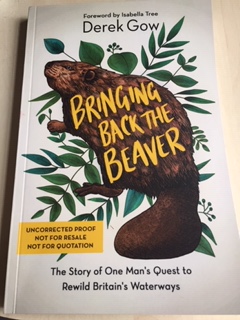
 As anyone who’s ever met or seen a talk by my boss Derek Gow will know, he is as much a force of nature as his subject animal, the industrious beaver. I always enjoy waiting to see what the reaction is when I mention who I work for to those who have clearly witnessed or had dealings with him. It’s either jubilant enthusiasm for his rousing persona and cavalier can-do attitude that is bizarrely rare in a lot of wildlife conservation, or a sharp intake of breath and a wry smile to the point you can almost hear the traumatic flashback like a veteran in a Vietnam war film.
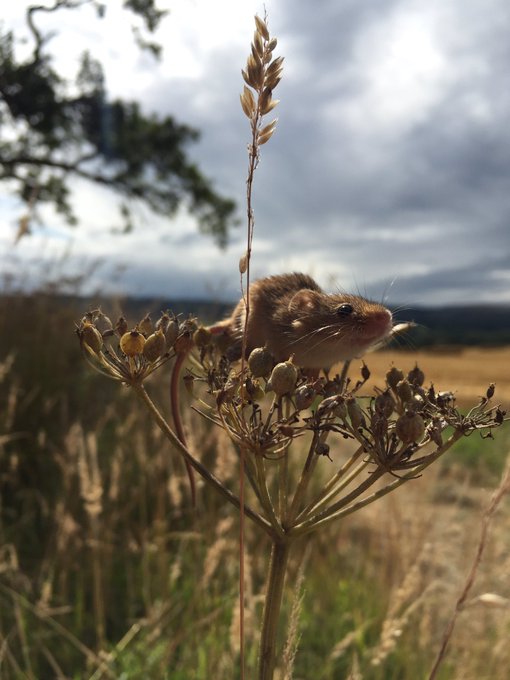
But in a world where our natural heritage is avalanching rather than trickling down the drain, Derek’s technique is increasingly vital, given it gives results. And importantly, he’s also capable of kicking your arse back to the task when it’s very easy to give up hope. This was something mentioned to me by National Trust rangers while working on two separate harvest mouse projects on Derek’s behalf (who, at time of writing, are undergoing calamitous times with over 1,200 jobs being cut as a result of the pandemic – it’s an absolutely awful scenario which no one deserved). After witnessing a Derek-speech, it reinvigorated their passion to keep doing what they can and doing better for wildlife, even when the odds seemed stacked against them.
This effort to inspire above the doom and uncertainty is very much apparent in written form in Derek’s new book, Bringing back the Beaver. After being supplied a pre-print copy and being asked to review it, I decided against the traditional format. After all, given I work for him that kinda skews the objectivity, and there might be severe consequences involving a bear trap and an angry wild boar if I went too critical. So instead, I’ve gone for a slightly different angle, looking at how the themes of the book need to drive our philosophy in protecting nature going forward. Continue reading


 Next comes a leashed Labrador clearly very excited by something encountered up ahead, wheezing and trying to skirt his way back to the opposite direction. His owner nods at me half-heartedly, his face red and flustered from working reasonably hard to keep him heeled. Carrying on, I naturally assume the white and brown form, partially obscured by a few adults and held round the collar by a boy of about 9 or 10, I was coming up to in the path is a bitch in heat, and that this family were quickly reassessing their decision to take her out to a public space on Sunday afternoon. When she bleated however, I adjusted my view to realise the bitch was a goat.

 Knowing that trying to see harvest mice in the wild is about as easy as getting a Glastonbury ticket (we tried and failed on both releases this October – we cling to the vain hope of March re-sales in the face of all odds), finding the old nest leaves me satisfied enough on this whistle-stop visit to Fishlake at the afternoon’s end. Close to sunset on a December evening is not exactly widely held as a prime time for nature watching, and I’ve already completed the end of the walk circuit. Above my head, more and more cormorants appear flying into roost, and even in the middle of a reedbed spanning almost the entire floodplain valley, the “chack-chack” of restless blackbirds echoing the end of the day can still be heard from the scrub around its edges.


 Pete Cooper Wildlife